Photo: Wikimedia Commons, CC BY-SA 3.0 · source

Tree · Betulaceae
Paper birch
Betula papyrifera
In other languages: Papierberk (Nederlands) · Bouleau à papier (Français)
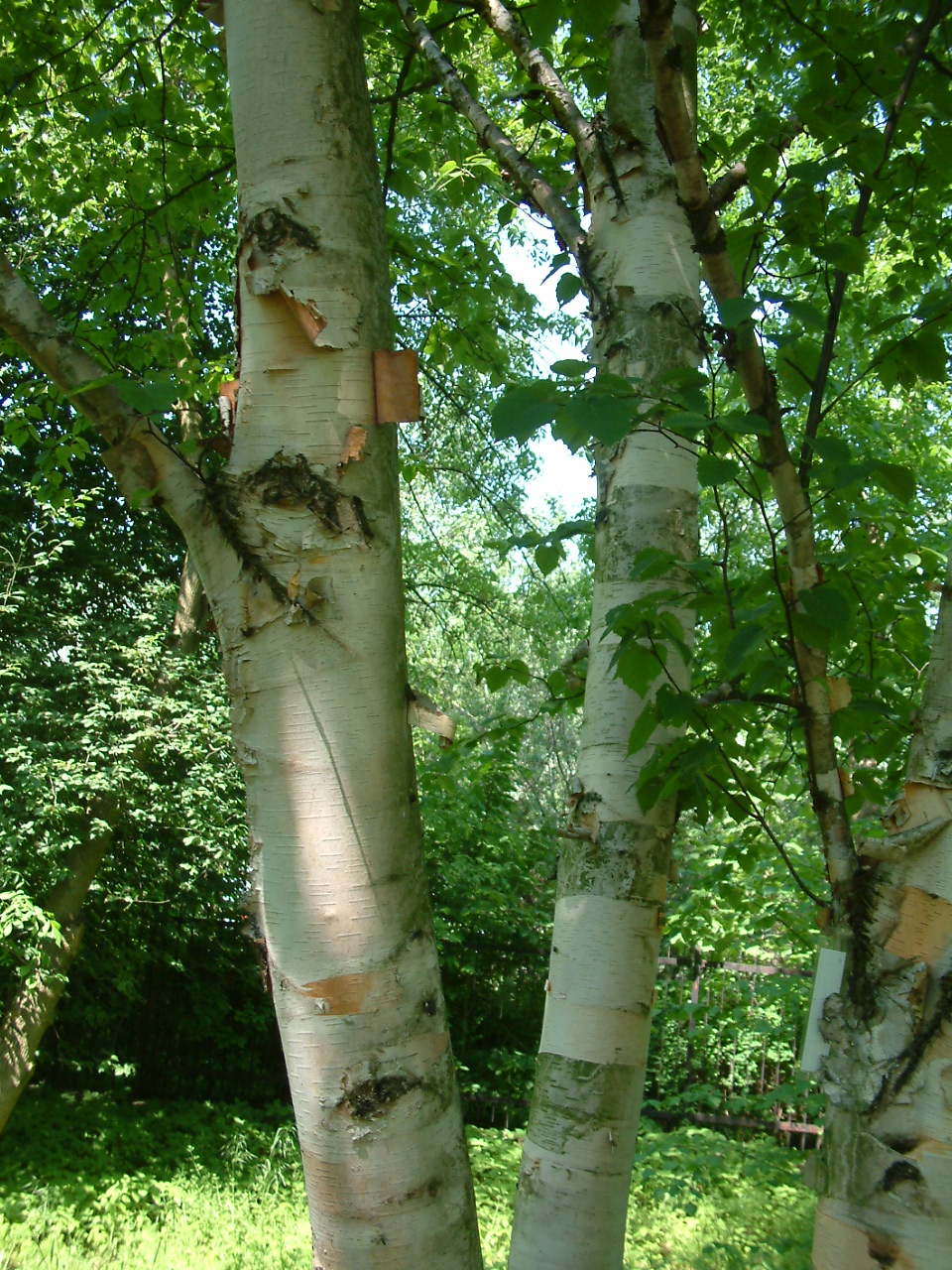
The paper birch comes from the northern forests of Canada, Alaska and the northern United States. It is a fast-growing tree with an open crown and brilliant white bark that peels in thin, papery strips. Young trunks are still reddish brown and turn white after a few years. Its leaves are larger than those of our native birches and turn bright yellow in autumn. It is extremely hardy and looks good as a single tree or as a multi-stemmed group.
Caution: Birches release a lot of pollen in April. If you are allergic to birch pollen, do not plant it right next to the house or patio.
Light
Sun or partial shade
preferably some sun
Moisture
Normal
no wet feet
Legal basis
Sand or loam
acid to neutral
Hardiness
Fully hardy
down to -40 °C
Size
18 m
tall, 10 m wide
Flowering
April
| Pruning months | July–October |
|---|---|
| Height | 18 m |
| Native to Belgium | No, planted |
| Poisonous to people and pets | Not known to be poisonous |
| Flowering | April |
Identify
Paper birch: how do you recognise it?
- Habit
- Fast-growing tree with an open, oval crown, up to about 18 m high and 10 m wide. Often multi-stemmed.
- Bark
- Chalk white with dark horizontal markings; peels in thin, papery layers. Young trunks are reddish brown.
- Leaves
- Oval with a pointed tip, 5–10 cm, double-toothed; dark green, bright yellow in autumn.
- Flowers
- In April, hanging male catkins and smaller upright female catkins. The pollen is spread by the wind.
- Roots
- Shallow and wide-spreading: it takes up a lot of water and dislikes drought.
Flowering: April · Plants: March–April and October–December · Pruning: July–October
In your garden
Why grow it?
- The white, peeling bark is eye-catching all year round, especially in winter.
- A light crown: enough light gets through for other plants underneath.
- Bright yellow autumn colour.
- A fast grower: within a few years you have a real tree.
- In winter, birds such as siskins pick the seeds out of the catkins.
- Extremely hardy.
Paper birch: where does it grow best?
- Full sun to light partial shade.
- Moist, free-draining sandy or loamy soil, acid to neutral. Not too dry: it suffers in hot, dry summers.
- Allow a spread of about 10 m and keep it a few metres from paving, pipes and the house.
- Against a dark background, such as a yew hedge, the white trunks stand out even more.
- Light
- Sun and partial shade
- Soil type
- Sand or loam
- Acidity
- Acid or neutral
- Moisture
- Normal
- Size
- 18 m tall, 10 m wide
- Hardiness
- Hardy (to -40 °C)
Goes well with
- Red-barked dogwood: Its red winter stems next to the white trunks are a classic winter contrast.
- Yew: A dark green hedge behind makes the white trunks glow.
- Snowdrop: Flowers in February under the bare, light crown.
- Ornamental grasses: They sway beautifully in the wind and like the same sunny, open spot.
- Heather: A low underplanting for acid sandy soil.
Maintenance
Paper birch: when and how to plant it?
Plant in March–April and October–December.
- Plant from October to December or in March–April, when the soil is neither frozen nor waterlogged. A root-balled or container-grown tree establishes better than a bare-root one.
- Dig a hole twice as wide as the root ball but no deeper.
- Set the tree at the same depth as before and give it a short stake on the windward side.
- For a multi-stemmed group, plant three young trees together in one hole, 30–50 cm apart and leaning slightly outwards.
- Water generously and lay a mulch circle around the base.
Care
- Water
- For the first three years, water generously every week in dry weather. Later too in dry summers, or the leaves drop early.
- Mulching
- A layer of leaf mould or wood chips keeps the shallow roots cool and moist.
- Feeding
- Not needed; a little compost in spring is enough.
- Bark
- Never peel bark off the trunk: the young layer underneath gets damaged and dark scars remain.
Tip: Plant three young paper birches together in one hole: you get a graceful multi-stemmed group with three times as many white trunks. Give them moist soil and prune only from July to October.
Paper birch: when to prune it?
Pruning months: July–October.
When: Only in summer or autumn, from July to October. In late winter and spring a birch bleeds heavily.
How:
- Prune little: remove only dead, damaged and crossing branches.
- Remove the lowest branches gradually if you want to see more of the white trunk.
- Cut back to a side branch or just outside the branch collar on the trunk; do not leave stubs.
- Never top a birch: it recovers badly and loses its shape.
Caution: Do not prune from January to June: the wounds then lose a lot of sap.
Propagation
- Seed
- Pick the catkins in late summer as they turn brown. In spring, scatter the fine seed on moist seed compost and do not cover it: it needs light to germinate.
- Self-sown seedlings
- Seedlings that come up in the garden can be moved while small, in autumn or early spring.
Paper birch: how does it get through the winter?
Hardy to −40 °C.
- Extremely hardy, to about −40 °C: no protection needed.
- The white trunks look their best in winter, especially against a dark hedge or in snow.
- Do not prune in winter: from January onwards it bleeds heavily.
Diseases and pests
- Drought: The leaves turn yellow in summer and drop early. Water deeply and apply a mulch.
- Birch rust: Small orange pustules on the undersides of the leaves in late summer, followed by early leaf fall. Not very harmful: rake up the fallen leaves.
- Aphids: Sticky honeydew on garden furniture and cars under the tree. Usually harmless: ladybirds and tits deal with them.
- Birch polypore: White, semicircular brackets on the trunk or large branches of a weakened tree: the wood is rotting. Have the tree checked, as affected parts can break off.
Through the year
- March: Planting. Apply mulch.
- April: Catkins and new leaves. Planting.
- May: Water young trees in dry spells.
- July: Pruning: dead and crossing branches out. Water in dry spells.
- August: Pruning possible. Pick catkins with seed as they turn brown.
- September: Pruning possible. Watch for rust on the leaves.
- October: Bright yellow autumn colour. Last month for pruning. Planting.
- November: Planting. Clear fallen leaves.
- December: Plant in mild weather. The white trunks light up the garden.
You and this species
Did you know?
- The indigenous peoples of North America made canoes, boxes and baskets from its tough, waterproof bark.
- The white colour of the bark comes from betulin, a substance found in large amounts in the outer bark.
- Birch bark burns well, even when damp, thanks to the oily substances it contains.