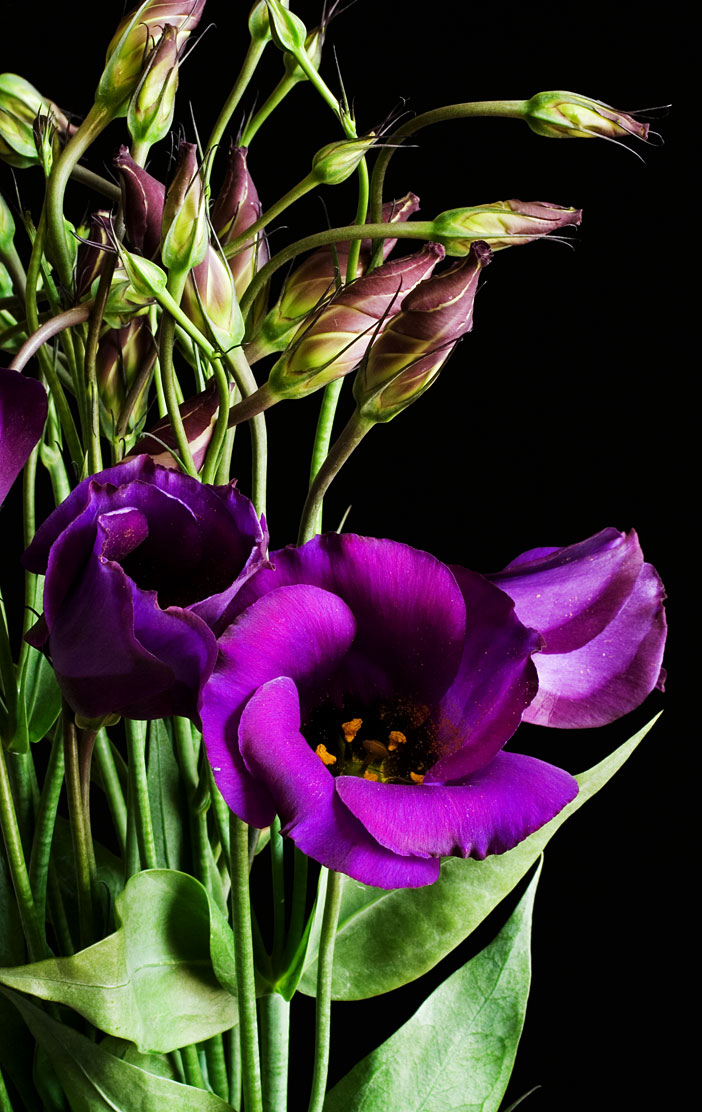
Photo: Wikimedia Commons, CC BY-SA 2.0 · source

Annual · Gentianaceae
Lisianthus
Eustoma grandiflorum
In other languages: Eustoma (Nederlands)
Eustoma, better known at the florist’s as lisianthus, comes from the prairies of the southern United States and northern Mexico. It is a biennial or short-lived plant that we grow as an annual. On slender, blue-green stems 50–70 cm tall, large cup-shaped flowers resembling a rose or a poppy appear in July–September, single or double. Colours range from purple through pink to white and cream, often with a coloured edge. It belongs to the gentian family and is one of the best cut flowers: in a vase it lasts for weeks. Raising it from seed takes patience, but with plug plants you have flowers the same summer.
Light
Full sun
warm and bright
Moisture
Normal
no wet feet
Legal basis
Sand or loam
neutral to chalky
Hardiness
down to 2 °C
protect in harsh winters
Size
0.7 m
tall, 0.25 m wide
Flowering
July–September
| Height | 0.7 m |
|---|---|
| Native to Belgium | No, planted |
| Poisonous to people and pets | Not known to be poisonous |
| Flowering | July–September |
Identify
Lisianthus: how do you recognise it?
- Habit
- Upright, slender plant 50–70 cm tall and only 20–25 cm wide, branching near the top. Dwarf varieties for pots also exist.
- Leaves
- Oval to oblong, 5–8 cm, opposite and clasping the stem, blue-green with a waxy coating.
- Flower
- Bell- to cup-shaped, 5–8 cm across, single or double, with satiny petals. Each stem carries several flowers and buds.
- Colour
- Purple, pink, white, cream, greenish and bicolours with a coloured edge.
- Seed
- Dust-fine seed that needs light to germinate.
Flowering: July–September · Sowing: December–February · Plants: May–June
In your garden
Why grow it?
- A superb cut flower that stays beautiful in the vase for weeks; even the buds open there.
- Elegant, rose-like flowers in purple, pink, white, cream and bicolours.
- Flowers in late summer, from July to September.
- Lovely in a cutting garden, a sunny border or a large pot on the patio.
- The blue-green leaves make a fine contrast with the flowers.
Lisianthus: where does it grow best?
- Full sun and warmth: the warmer the summer, the richer the flowering.
- Light, free-draining soil: sand or loam, neutral to chalky. On acid soil it grows less well; add a little lime.
- Evenly moist but never wet: in wet soil the roots rot.
- Sheltered from wind, as the long stems snap easily.
- Plant 15–20 cm apart, in rows or groups: that way the stems also support each other.
- Light
- Sun
- Soil type
- Sand or loam
- Acidity
- Neutral or chalky
- Moisture
- Normal
- Size
- 0.7 m tall, 0.25 m wide
- Hardiness
- Frost tender: plant out after the last frost (mid-May)
Goes well with
- Snapdragon: Upright spikes in the same colours, also a good cut flower.
- Zinnia: Warm colours and the same love of sun, perfect for a cutting garden.
- Baby’s breath: A cloud of tiny white stars around the large flowers, in the garden and in the vase.
- Cosmos: Airy pink and white flowers that bloom at the same time.
Maintenance
Lisianthus: when and how to plant it?
Plant in May–June.
- Sow indoors in December–February at 20 °C on moist seed compost. Press the dust-fine seed onto the surface without covering it, as it needs light to germinate.
- Keep the sowing moist under a lid. The seedlings grow very slowly for the first months: allow five months until flowering.
- Easier: buy plug plants in April–May and pot them up into small pots.
- Plant out in May–June, once nights stay mild, as it does not tolerate frost.
- Set the plant at the same depth as in its pot, no deeper, 15–20 cm apart.
- Water in and, for tall varieties, put up a net or canes straight away so the stems can grow through.
Care
- Watering
- Keep the soil evenly moist. Water in the morning at the base and keep the leaves dry.
- Feeding
- From June, a low dose of liquid feed for flowering plants every two weeks.
- Support
- Tall varieties need a net, canes or strings, or they flop after rain.
- Cutting
- Cut a stem when the first flower has opened; the other buds will open in the vase. Change the water regularly.
- Spent flowers
- Remove them. After the first stems are cut, a second, smaller flush sometimes follows.
Tip: Buy plug plants if you lack patience or a heated place to sow: sowing in December–February at 20 °C works, but you will wait five months for flowers. Cut the stems as soon as the first flower opens: they last for weeks in a vase.
Lisianthus: when to prune it?
When: An annual that is not pruned. Cutting flowers for the vase and removing spent blooms is the only pruning it needs.
How:
- Cut flowers for the vase with a long stem when the first flower on the stem has opened.
- Snip off spent flowers just above a leaf, so the plant puts its energy into new buds.
- Clear the plant in October or after the first frost.
Propagation
- Seed
- Sow indoors in December–February at 20 °C, in the light and uncovered. The seedlings stay tiny for weeks and need a great deal of patience. Prick them out carefully as soon as they can be handled.
Lisianthus: how does it get through the winter?
Hardy to 2 °C: protect in harsh winters.
- Not hardy: it dies with even a light frost. In a Belgian garden, grow it as an annual.
- Clear the plants in October; overwintering rarely works and is not worth the effort.
- Sow again indoors in December, or buy new plug plants in spring.
Diseases and pests
- Grey mould: Brown spots and grey fluff on flowers and leaves in damp weather. Water at the base, keep enough space between plants and remove affected parts.
- Root and stem rot: The plant suddenly wilts and the base of the stem turns brown. Avoid wet soil and do not plant too deep.
- Aphids and thrips: Small insects on buds and leaves, or silvery flecks on the flowers. Hose them off; in a greenhouse, predatory mites help.
- Slow seedlings: The seedlings seem to stand still for weeks: that is normal. Give them enough light, warmth and patience.
- Falling stems: They snap after rain or wind. Put up a net or canes in good time.
Through the year
- January: Sow indoors. Keep seedlings warm and bright.
- February: Last month for sowing. Prick out seedlings carefully.
- April: Buy and pot up plug plants. Grow young plants on warm and bright.
- May: Plant out once nights stay mild. Put up a net or canes.
- June: Plant out. Feed and water evenly.
- July: First flowers. Cut stems for the vase.
- August: Full flower. Water at the base.
- September: Last flowers. Remove spent blooms.
- October: Clear the plants.
- December: Sow indoors at 20 °C, leaving the seed uncovered.
You and this species
Did you know?
- The name Eustoma comes from Greek and means ‘beautiful mouth’, after the wide opening of the flower.
- Lisianthus is an older botanical name that has stuck in the flower trade.
- Many modern varieties, including the double ones, come from Japan, where the plant has long been bred as a cut flower.