Photo: Wikimedia Commons, Public domain · source

Tree · Ericaceae
Sourwood
Oxydendrum arboreum
In other languages: Zuurboom (Nederlands) · Oxydendrum (Français)
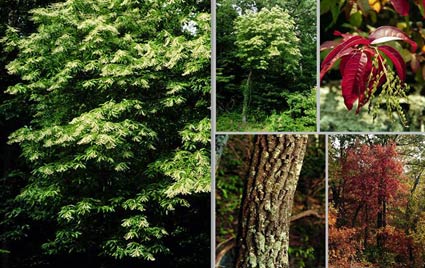
Sourwood comes from the eastern United States, where it grows on wooded slopes with acid soil. It is a small, slow-growing tree of the heather family, with glossy leaves that turn fiery red in autumn. In July–August it carries graceful sprays of small white, urn-shaped flowers that recall lily of the valley and are visited by plenty of bees. The small grey fruits then stay on the branches well into winter. Like rhododendrons it wants acid, humus-rich soil, and given that it is an exceptionally ornamental tree for a small to medium-sized garden.
Light
Sun or partial shade
preferably some sun
Moisture
Normal
no wet feet
Legal basis
Sand, loam or peat
acid
Hardiness
Fully hardy
down to -25 °C
Size
8 m
tall, 5 m wide
Flowering
July–August
| Pruning months | February |
|---|---|
| Height | 8 m |
| Native to Belgium | No, planted |
| Good for bees, butterflies and birds | Yes, for bees |
| Poisonous to people and pets | Not known to be poisonous |
| Flowering | July–August |
Identify
Sourwood: how do you recognise it?
- Habit
- Small tree about 8 m tall and 5 m wide, with a straight trunk and a narrow, rounded crown; slow growing.
- Leaves
- Alternate, lance-shaped, 10–20 cm, glossy dark green with a finely toothed edge; the leaves taste sour. Scarlet to purple-red in autumn.
- Flowers
- Small white, urn-shaped flowers in drooping sprays of 15–25 cm, in July–August, with a soft, sweet scent.
- Fruit
- Small, dry grey capsules arranged in rows along the sprays; they stay on the tree into winter.
- Bark
- Grey and deeply furrowed on older trees.
- Roots
- Fine and fibrous, not deep: it wants a cool, moist, humus-rich root zone.
Flowering: July–August · Plants: March–April and October–December · Pruning: February
In your garden
Why grow it?
- Fiery red autumn colour: one of the finest among garden trees.
- White flower sprays in July–August, at a time when few trees flower.
- A good bee tree: the flowers yield plenty of nectar and have a soft, sweet scent.
- At about 8 m tall and 5 m wide, it stays small enough for an ordinary garden.
- Attractive in winter too, thanks to the furrowed bark and the grey fruit sprays that stay on the tree.
Sourwood: where does it grow best?
- Sun to partial shade: in full sun it colours best in autumn and flowers most freely.
- Acid, humus-rich soil: sand, loam or peaty soil. No lime and no hard water.
- Normally moist and well drained: avoid both drying out and wet feet.
- Sheltered from dry, cold wind.
- Allow 5 m width; lovely in a small group with rhododendrons and other ericaceous plants.
- Light
- Sun and partial shade
- Soil type
- Sand, loam or peat
- Acidity
- Acid
- Moisture
- Normal
- Size
- 8 m tall, 5 m wide
- Hardiness
- Hardy (to -25 °C)
Goes well with
- Rhododendron: Same acid, humus-rich soil; flowers in spring, before the sourwood.
- Pieris: Evergreen, with white bells in spring and a lovely contrast with the autumn colour.
- Heather: Low, sunny underplanting that flowers in late summer.
- Japanese maple: Colours up in autumn too, on the same sheltered, acid soil.
Maintenance
Sourwood: when and how to plant it?
Plant in March–April and October–December.
- Plant in March–April or from October to December, on a frost-free day.
- Dig a hole twice as wide as the root ball and just as deep. Mix the excavated soil with acid leaf mould or fine pine bark.
- Set the tree at the same depth as in its pot: the root collar stays at soil level.
- Add a stake and tie the trunk loosely so the tree does not rock in the wind.
- Water generously straight away, preferably with rainwater: hard tap water gradually makes the soil less acid.
- Spread 5–8 cm of pine bark or leaf mould mulch around the tree, keeping it clear of the trunk.
Care
- Water
- In the first years, water generously every week in dry spells, preferably with rainwater. Mature trees tolerate a short drought, but the best colour comes from soil that does not dry out.
- Feeding
- In spring, a thin layer of acid compost or a fertiliser for ericaceous plants. Do not overfeed.
- Mulching
- Pine bark or leaf mould keeps the root zone cool and the soil acid.
- Soil acidity
- Do not use lime or lime-rich fertiliser near the tree.
- Stake
- Leave the stake in place for 2–3 years and check the tie so it does not cut into the bark.
Tip: Plant it in acid soil and water with rainwater: on chalky soil the leaves turn yellow. A thick mulch of pine bark keeps the soil cool and acid.
Sourwood: when to prune it?
Pruning months: February.
When: It hardly needs pruning. If necessary, remove dead wood in February, in dry, frost-free weather.
How:
- Cut out only dead, diseased, crossing and damaged branches.
- Keep the natural, graceful shape: do not shorten the tree.
- If you want a higher crown, remove the lowest branches gradually over the years.
Caution: A tree that has been pruned hard recovers slowly: keep to light cuts.
Propagation
- Seed
- The seeds are very small. Sow them in spring on the surface of damp, acid compost (ericaceous compost), barely cover them and keep them bright and cool. Seedlings grow slowly.
- Cuttings
- Cuttings are difficult. For the garden, a young tree from a nursery is the best choice.
Sourwood: how does it get through the winter?
Hardy to −25 °C.
- Hardy to about −25 °C: no protection is needed in Belgium.
- On young trees, a thick layer of mulch at the base protects the shallow roots from severe frost.
- Leave the grey fruit sprays on the tree: they are an attractive detail in winter.
Diseases and pests
- Yellow leaves: Pale leaves with green veins on chalky soil (chlorosis). Add acid compost and rainwater, and if needed a fertiliser for ericaceous plants.
- Drought damage: Brown leaf edges and early leaf fall in heat or drought. Mulch and water generously in dry summers.
- Root rot: Wilting leaves and dying branches in soil that stays wet for long. Provide well-drained soil or plant slightly raised.
- Aphids and scale: Now and then on young shoots. Spray them off with a strong jet of water or brush them away with soapy water.
Through the year
- February: If needed, remove dead wood in dry, frost-free weather.
- March: Planting is possible. Renew the mulch of pine bark or leaf mould.
- April: Plant. Give a thin layer of acid compost.
- May: The leaves unfurl. Water in dry weather.
- June: Water young trees in dry weather.
- July: The flower sprays open. Water in dry weather.
- August: Full flower, bees on the blooms. Water in hot weather.
- September: The fruits ripen; first autumn colour.
- October: Fiery red autumn colour. Plant.
- November: Plant. Mulch around young trees.
- December: Rest. The grey fruit sprays stay on the tree.
Use
Good for wildlife
- Bees
- Nectar and pollen for honeybees and wild bees.
You and this species
Did you know?
- It owes its name to the leaves, which taste sour.
- In the Appalachians, a famous honey is made from the nectar of this tree: sourwood honey.
- It is the only species in its genus and belongs to the heather family, like rhododendron, heather and blueberry.