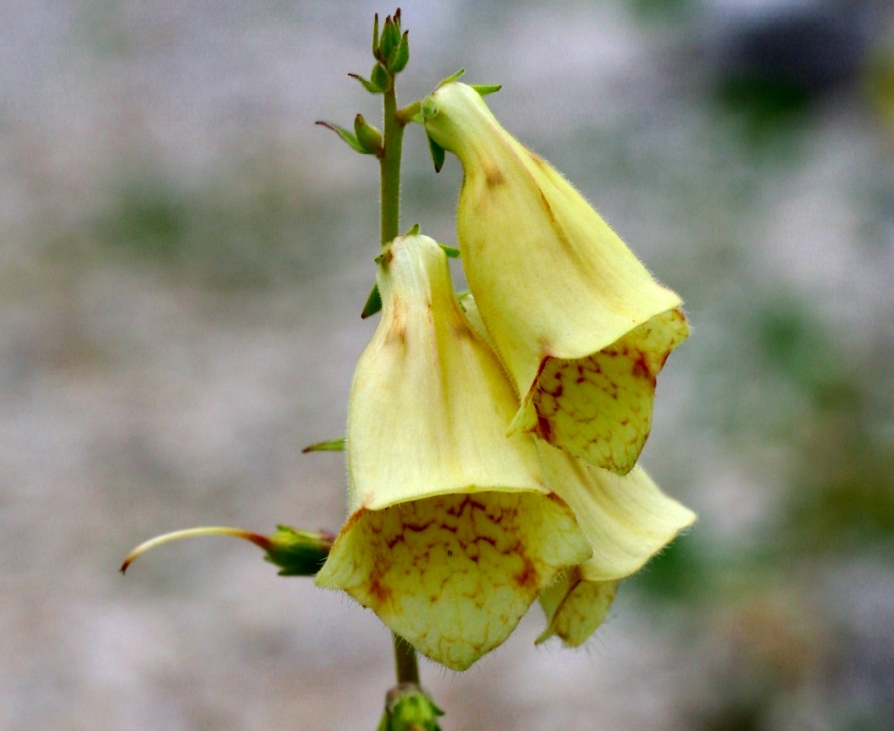
Photo: Enrico Blasutto, CC BY-SA 3.0 · source

Pruning guide · Perennial
Large yellow foxglove: when and how to prune
Digitalis grandiflora
Large yellow foxglove is best pruned in March and July–August.
| Pruning months | March and July–August |
|---|---|
| Flowering | June–August |
| Good for bees, butterflies and birds | Yes, for bees |
| Native to Belgium | No, planted |
| Poisonous to people and pets | Yes, take care with children and pets |
Large yellow foxglove: when to prune it?
After the first flush, in July–August, cut off the faded spikes; in March clear away the old stems.
Large yellow foxglove: how to prune it?
- Cut the faded spike off just above the leaves or a side shoot: a second flush will follow.
- Leave the last spikes if you want it to self-seed.
- In March cut away the old, dry stems; the leaf clump stays.
How much to cut, and how often?
- There are 2 pruning periods a year: March and July–August. You don’t have to prune in every one.
What does it mean for wildlife?
- Large yellow foxglove flowers in June–August, when it attracts bees.
- If pruning falls during flowering, wait until it is over or leave part of the plant to flower, so bees and butterflies still benefit.
Caution: Wear gloves: all parts are highly poisonous, including the sap.
Nearby: related pruning guides
Plant profile: Large yellow foxglove · Pruning calendar and basic rules
This guide is compiled from the Bladwijzer plant profile and pruning calendar.