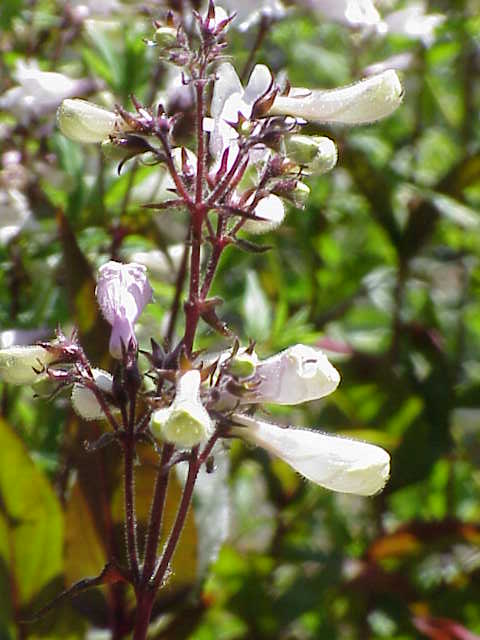
Photo: Wikimedia Commons, CC BY-SA 3.0 · source

Pruning guide · Perennial
Foxglove beardtongue (Penstemon digitalis): when and how to prune
Penstemon digitalis
Foxglove beardtongue (Penstemon digitalis) is best pruned in March.
| Pruning months | March |
|---|---|
| Flowering | June–July |
| Good for bees, butterflies and birds | Yes, for bees |
| Native to Belgium | No, planted |
Foxglove beardtongue (Penstemon digitalis): when to prune it?
In March, cut down the old seed stems. No pruning is needed for the rest of the year.
What else to prune in those months? March
Foxglove beardtongue (Penstemon digitalis): how to prune it?
- Leave the spent stems standing in autumn and winter: they look lovely with frost on them.
- In March, cut them back to just above the leaf rosette.
- Leave the rosette itself: the new stems grow from it.
How much to cut, and how often?
- One pruning period a year: March.
What does it mean for wildlife?
- Foxglove beardtongue (Penstemon digitalis) flowers in June–July, when it attracts bees.
- If you only cut back in March, the old stems stand through the winter: insects overwinter in them and birds eat the seeds.
Caution: Do not cut away the leaf rosette at the base: the plant needs it to get through winter and spring.
Nearby: related pruning guides
- Golden-beard penstemon (Penstemon barbatus)
- Hartweg's beardtongue (Penstemon hartwegii)
- Pineleaf penstemon (Penstemon pinifolius)
Plant profile: Foxglove beardtongue (Penstemon digitalis) · Pruning calendar and basic rules
This guide is compiled from the Bladwijzer plant profile and pruning calendar.