Side by side
Grey poplar or white poplar? How to tell them apart
Populus × canescens · Populus alba
How to tell them apart – grey poplar: poplar with a roundish, coarsely toothed leaf with a grey-felted underside, and a whitish-grey trunk with diamond-shaped lenticels; white poplar: leaf on long shoots deeply lobed like a maple leaf, with a snow-white felted underside.
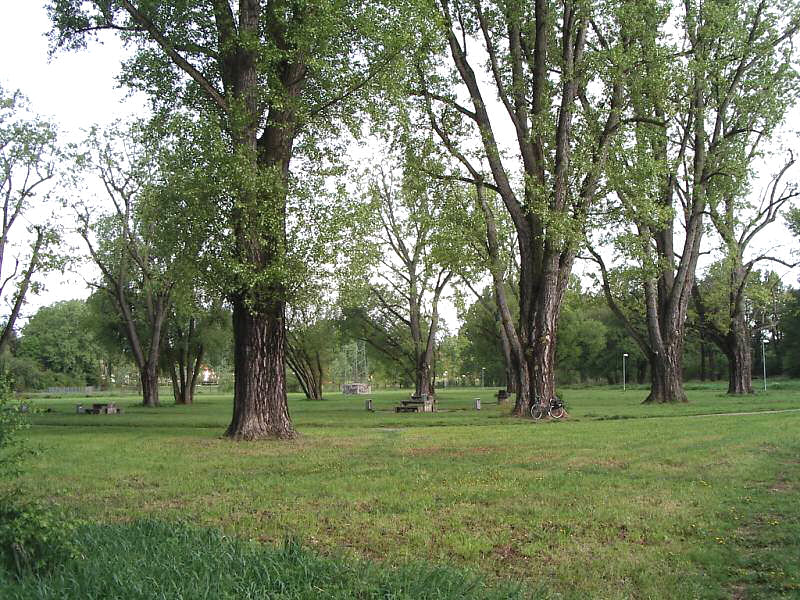
Photo: The original uploader was Keichwa at German Wikipedia., Photograph Keichwa, CC BY-SA 3.0 · source
Grey poplar Populus × canescens


How do you recognise them?
- Grey poplar
- Poplar with a roundish, coarsely toothed leaf with a grey-felted underside, and a whitish-grey trunk with diamond-shaped lenticels.
- White poplar
- Leaf with a snow-white, felted underside; on long shoots lobed like a maple leaf.
- Compared with grey poplar: leaf on long shoots deeply lobed like a maple leaf, with a snow-white felted underside.
| Grey poplar | White poplar | |
|---|---|---|
| Leaves | Alternate; on short shoots roundish to oval, 4–8 cm, irregularly and coarsely toothed; on long shoots larger and slightly lobed. Underside grey-felted, often becoming almost hairless later. | Alternate; on long shoots palmate with 3–5 lobes, on short shoots oval with wavy teeth. Underside and young twigs white-felted. |
| Flowering | Grey, hairy catkins in March, before the leaves (March). | March |
| Fruit | Fluffy seeds in May, on female trees. | Catkins in March; fluffy seeds in May. |
| Bark | Whitish grey with rows of dark, diamond-shaped lenticels; dark and furrowed at the base of the trunk. | Whitish-grey with rows of dark, diamond-shaped lenticels; dark and fissured at the base of the trunk. |
| Shape and height | Broadleaf tree, 20–30 m | Broadleaf tree, 15–30 m |
| Site | Full sun, any garden soil, dry to wet | Full sun, any garden soil, dry to wet |
| Native to Belgium | Yes | No, naturalised |
| Good for bees, butterflies and birds | – | Yes, for butterflies |
| Poisonous to people and pets | Not known to be poisonous | Not known to be poisonous |
| Pruning months | November–March | November–March |
What does it mean for your garden?
- Grey poplar is native: it feeds more insects and birds than a non-native species. If in doubt, choose this one.
- Grey poplar (20–30 m) and white poplar (15–30 m) both grow into large trees: too big for an ordinary garden, but fine in a large garden, a park or a meadow.
Read on
- Plant profile: Grey poplar
- Plant profile: White poplar
- Grey poplar: when and how to prune
- White poplar: when and how to prune
- Identification key
Also looks like
Identify by feature
This comparison is compiled from the Bladwijzer species pages.