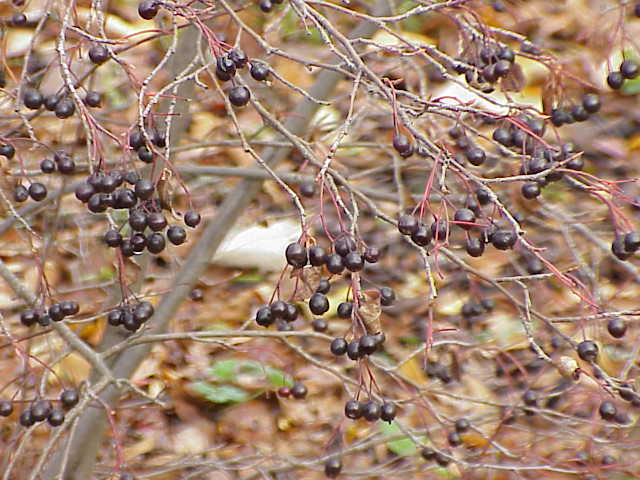
Photo: Kurt Stüber [1], CC BY-SA 3.0 · source

Pruning guide · Shrub
Purple chokeberry: when and how to prune
Aronia × prunifolia
Purple chokeberry is best pruned in February–March.
| Pruning months | February–March |
|---|---|
| Nesting season (15 March–15 August) | Take care in March |
| Flowering | May |
| Good for bees, butterflies and birds | Yes, for bees and birds |
| Native to Belgium | No, planted |
Purple chokeberry: when to prune it?
In February–March, while the shrub is still dormant. No pruning is needed in the first few years.
Purple chokeberry: how to prune it?
- From the fourth or fifth year, remove a few of the oldest, least productive stems at ground level each year.
- Cut out dead, diseased and crossing branches.
- Remove surplus suckers around the edge so the shrub does not get too wide.
- Never remove more than a third of the stems at once.
How much to cut, and how often?
- One pruning period a year: February–March.
- Prune in moderation: never remove more than about a third of the shrub at once.
What does it mean for wildlife?
- Pruning in March can fall in the nesting season (15 March–15 August). Check carefully for nesting birds first: disturbing an active nest is against the law.
- Purple chokeberry flowers in May, when it attracts bees.
- In August–September birds eat the fruit: leave some on the plant or on the ground.
- Prunings can go on a dead hedge or brash pile in a corner of the garden: shelter for hedgehogs, wrens and insects.
Common mistakes
- Clipping without first checking for nesting birds.
- Leaving a stub or sawing flush with the trunk: cut just outside the branch collar.
Caution: It fruits on older branches: shortening every branch costs you a large part of the crop.
Nearby: related pruning guides
Plant profile: Purple chokeberry · Pruning calendar and basic rules
This guide is compiled from the Bladwijzer plant profile and pruning calendar.