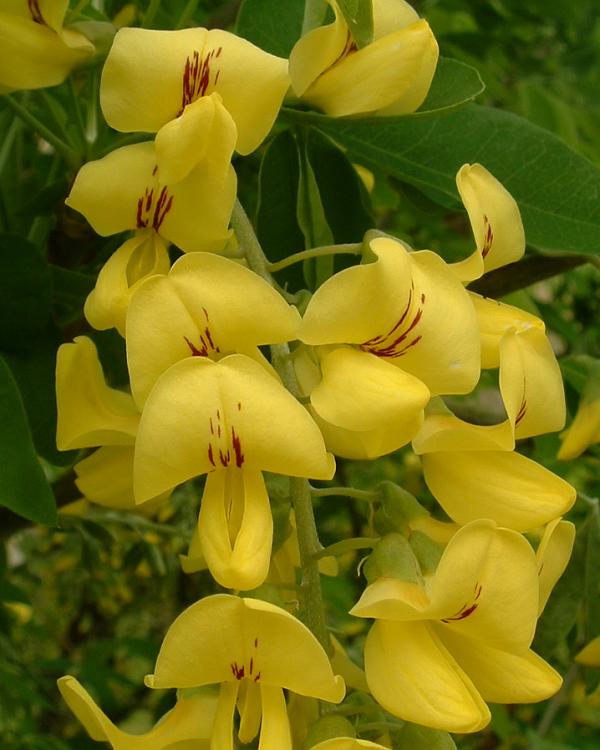
Photo: Wikimedia Commons, CC BY-SA 3.0 · source

Pruning guide · Broadleaf tree
Common laburnum: when and how to prune
Laburnum anagyroides
Common laburnum is best pruned in July–September.
| Pruning months | July–September |
|---|---|
| Nesting season (15 March–15 August) | Take care in July–August |
| Flowering | May–June |
| Native to Belgium | No, planted |
| Poisonous to people and pets | Yes, take care with children and pets |
Common laburnum: when to prune it?
After flowering, in summer (July–September).
What else to prune in those months? July · August · September
Common laburnum: how to prune it?
- Prune lightly; large wounds heal slowly.
- Cut off spent flower clusters before they set seed: this spares the tree and prevents poisonous pods.
- Remove dead, crossing and overlong branches, cutting back to a side branch.
How much to cut, and how often?
- One pruning period a year: July–September.
- Grows best when left alone. Only remove dead, diseased or awkward branches.
What does it mean for wildlife?
- Pruning in July–August can fall in the nesting season (15 March–15 August). Check carefully for nesting birds first: disturbing an active nest is against the law.
- Prunings can go on a dead hedge or brash pile in a corner of the garden: shelter for hedgehogs, wrens and insects.
Common mistakes
- Clipping without first checking for nesting birds.
- Pruning too much: it grows best when left alone.
- Leaving a stub or sawing flush with the trunk: cut just outside the branch collar.
Caution: Wear gloves and clear away all prunings: the branches, leaves and bark are poisonous too, and must never end up in a field or near animals.
Nearby: related pruning guides
Similar to: Difference from Chinese wisteria
Plant profile: Common laburnum · Pruning calendar and basic rules
This guide is compiled from the Bladwijzer plant profile and pruning calendar.