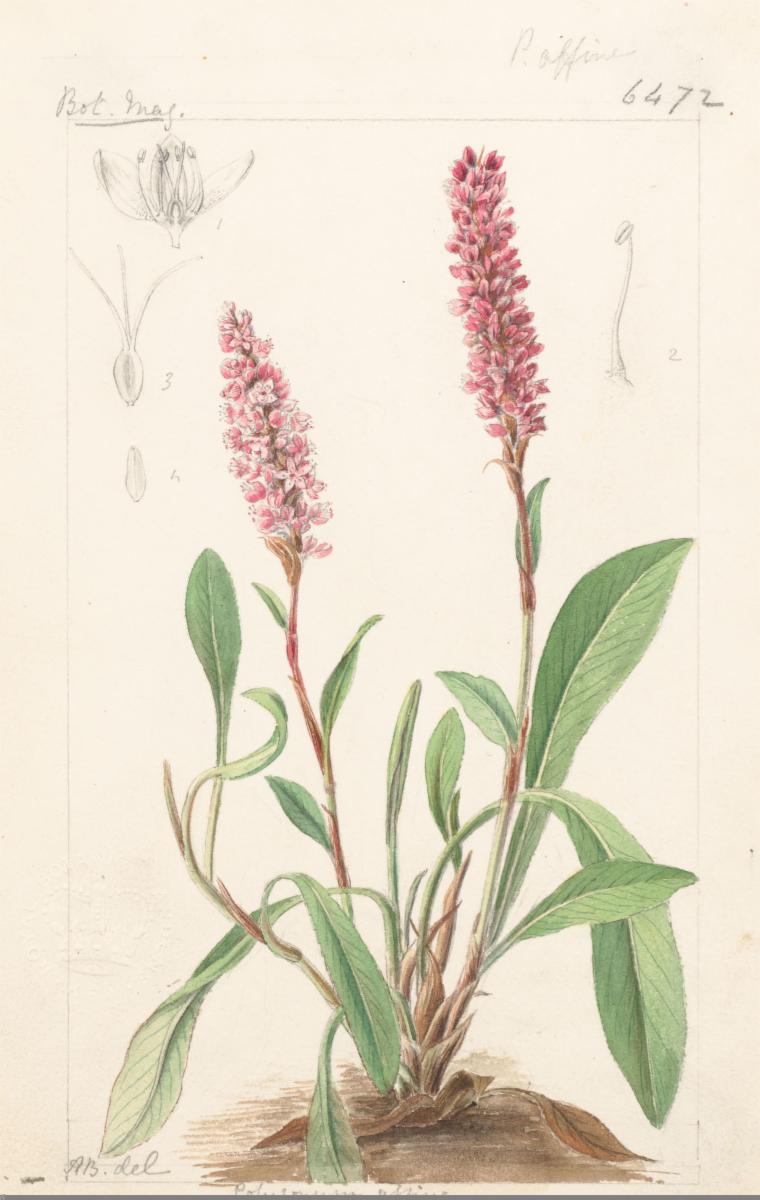
Photo: Ann Barnard, Public domain · source

Pruning guide · Perennial
Himalayan knotweed (Persicaria affinis): when and how to prune
Persicaria affinis
Himalayan knotweed (Persicaria affinis) is best pruned in March.
| Pruning months | March |
|---|---|
| Flowering | July–October |
| Good for bees, butterflies and birds | Yes, for bees |
| Native to Belgium | No, planted |
Himalayan knotweed (Persicaria affinis): when to prune it?
In March, before the new shoots start to grow.
What else to prune in those months? March
Himalayan knotweed (Persicaria affinis): how to prune it?
- Cut off dead foliage and dried spikes, and trim the carpet down to a few centimetres above the ground.
- After flowering you can cut off faded spikes if you want a tidy mat.
- Cut the edges with a spade to limit spreading.
- Remove bare or dried-out patches and replant healthy pieces there.
How much to cut, and how often?
- One pruning period a year: March.
What does it mean for wildlife?
- Himalayan knotweed (Persicaria affinis) flowers in July–October, when it attracts bees.
- If you only cut back in March, the old stems stand through the winter: insects overwinter in them and birds eat the seeds.
Nearby: related pruning guides
- Common bistort (Persicaria bistorta)
- Jumpseed (Persicaria virginiana)
- Red bistort (Persicaria amplexicaulis)
- Amphibious bistort
- Vietnamese coriander
Plant profile: Himalayan knotweed (Persicaria affinis) · Pruning calendar and basic rules
This guide is compiled from the Bladwijzer plant profile and pruning calendar.