Photo: Wikimedia Commons, CC BY-SA 3.0 · source

Herb · Apiaceae
Garden angelica
Angelica archangelica
In other languages: Grote engelwortel (Nederlands) · Angélique officinale (Français)
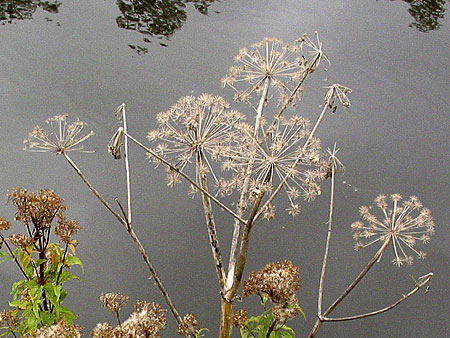
Garden angelica is a stately herb of the carrot family from northern Europe, from Scandinavia and Iceland to Greenland, and from parts of northern Asia. In its first year it forms a large clump of deeply cut, fresh green leaves; in the second or third year it shoots up into a hollow, ribbed flower stem 1.5–2 m tall carrying large, globe-shaped heads of small yellow-green flowers. The whole plant smells spicy and sweet. After flowering and setting seed it dies, but it self-seeds readily. For centuries the young stems have been candied, and the seeds and root used to flavour liqueurs and gin.
Caution: The sap contains substances that, combined with sunlight, can inflame the skin, causing red patches or blisters. Wear gloves and long sleeves when harvesting and cutting back. Never pick wild umbellifers to eat: some, such as hemlock, are highly poisonous and look very similar.
Light
Sun or partial shade
preferably some sun
Moisture
Normal to wet
must not dry out
Legal basis
Sand, loam or clay
any pH
Hardiness
Fully hardy
down to -30 °C
Size
2 m
tall, 1 m wide
Flowering
June–July
| Pruning months | July–August |
|---|---|
| Height | 2 m |
| Native to Belgium | No, planted |
| Good for bees, butterflies and birds | Yes, for bees |
| Poisonous to people and pets | In part: see Caution above |
| Flowering | June–July |
Identify
Garden angelica: how do you recognise it?
- Habit
- Biennial or short-lived plant: a leaf rosette in the first year, then a hollow flower stem up to about 2 m tall and 1 m wide.
- Leaf
- Large, two to three times pinnate, with toothed leaflets; the leaf stalks clasp the stem with an inflated sheath.
- Flower
- Small yellow-green flowers in large, globe-shaped umbels in June–July.
- Fruit
- Flat, ridged seeds that ripen in late summer; they soon lose their viability.
- Scent
- All parts smell spicy and sweetish, especially when bruised.
- Roots
- A thick, fleshy taproot.
Flowering: June–July · Harvest and fruit: May–June and August–September · Sowing: August–September · Plants: April–May and September · Pruning: July–August
In your garden
Why grow it?
- An architectural giant with globe-shaped flower heads: a focal point in the border or herb garden.
- In June–July the flowers attract bees, hoverflies and other insects.
- The whole plant has a pleasant, spicy scent.
- Edible: the young stems are candied and the leaves are used as a herb.
- A good choice for damp spots, including the edge of a pond.
Garden angelica: where does it grow best?
- Sun or partial shade; in partial shade the soil stays moist for longer.
- Deep, humus-rich soil: sand, loam or clay, acid to chalky.
- Moist to wet: it is at home at the edge of a pond or in a damp border. It does poorly in dry soil.
- Sheltered from strong wind, which can snap the tall stems.
- Allow about 1 m of space per plant.
- Light
- Sun and partial shade
- Soil type
- Sand, loam or clay
- Acidity
- Not fussy
- Moisture
- Normal or wet
- Size
- 2 m tall, 1 m wide
- Hardiness
- Hardy (to -30 °C)
Goes well with
- Rhubarb: Equally large leaves and the same love of moist, rich soil.
- Lovage: Another large umbellifer for the herb garden.
- Meadowsweet: Flowers at the same time in the same damp spot.
- Purple loosestrife: Purple spikes next to the yellow-green flower heads.
Maintenance
Garden angelica: when and how to plant it?
Plant in April–May and September.
- Plant young plants in April–May or in September.
- Choose young plants: because of the taproot, older plants transplant badly.
- Dig a hole twice the size of the pot and mix in compost.
- Set the plant at the same depth as in the pot, about 1 m apart.
- Water well straight away and keep the soil moist for the first few weeks.
- Spread a layer of compost as a mulch to hold in moisture.
Care
- Water
- Keep the soil moist; water generously in dry spells.
- Feeding
- A layer of compost in spring is enough.
- Support
- In a windy spot, tie the flower stem to a sturdy stake.
- Lifespan
- If you cut off the flower buds, the plant often lives another year; if you let it flower, it dies after setting seed.
- Harvesting
- Cut young stems and leaf stalks in April–May, before flowering, for candying. Young leaves can be picked all season for soups, salads or with stewed fruit. Harvest the seed when it is yellowish brown.
Tip: Only sow fresh seed, straight after harvest in August–September, and barely cover it. Let a few heads self-seed every year and you will always have new plants coming on.
Garden angelica: when to prune it?
Pruning months: July–August.
When: Real pruning is not needed. After flowering, in July–August, cut off the flower heads or harvest the seed; then remove the dead plant.
How:
- If you do not want seedlings, cut off the spent flower heads before the seed ripens.
- Leave a few heads if you want it to self-seed or wish to harvest seed.
- After setting seed the plant dies: cut the stem at the base and remove the root.
- Wear gloves and long sleeves when working on sunny days.
Caution: The sap can irritate the skin in combination with sunlight.
Propagation
- Seed
- Sow fresh seed in August–September where it is to grow or in small pots, barely covered: it germinates in the light and soon loses its viability. If you do store seed, keep it cool and sow within a few months.
- Self-sown seedlings
- Let a few heads ripen; move the seedlings while young, in September or in April–May.
Garden angelica: how does it get through the winter?
Hardy to −30 °C.
- Very hardy, to about −30 °C: no protection is needed in Belgium.
- The leaves die back in autumn; the plant overwinters as a root and regrows in March.
- Late-summer seedlings overwinter without problems as small rosettes.
Diseases and pests
- Aphids: Black aphids on stems and flower heads in June. Spray off with water; ladybirds and earwigs help.
- Slugs: They eat young seedlings and young leaves. Protect them for the first few weeks.
- Dying off: The plant dies after flowering: this is normal. Let seed ripen or sow yourself for a succession.
- Drying out: Limp leaves in dry summers. Water generously and mulch.
Through the year
- March: The plant starts into growth. Apply compost.
- April: Plant. Harvest young stems for candying.
- May: Plant. Harvest stems and leaf stalks before flowering. Provide support.
- June: Flowering. Watch for aphids.
- July: Flowering. Cut off spent heads if you do not want seedlings.
- August: Harvest seed and sow straight away. Remove dead plants.
- September: Sow and set out young plants.
- October: The leaves die back.
- November: Dormant.
Use
Edible and useful
- Stems (May–June)
- In May and June, cut the young, still tender leaf stalks and stems of plants in their second year, before flowering. They taste sweet and aromatic, a little musky and reminiscent of celery. Candied, they are the classic green decoration for cakes; you can also cook them with rhubarb.
- Seeds (August–September)
- The seeds ripen in August–September. Cut the umbels when the seeds are straw-yellow and leave them to finish drying in a paper bag. Strongly scented, they are used in liqueurs and herbal bitters; add a pinch to biscuits or stewed fruit.
- Storing
- Candied stems keep for months in a closed jar. Keep dried seeds in a closed jar in the dark for up to a year. Fresh stems keep for a few days in the fridge.
Caution: Angelica belongs to the carrot family: do not confuse it with hemlock or cowbane, which are deadly poisonous and also grow by water. Only harvest from a plant you planted yourself. In sunlight the sap can cause blisters on the skin: wear gloves and long sleeves when cutting it. Do not use angelica during pregnancy and do not eat large amounts.
Eating and using is at your own risk: see the terms of use.
Recipes
- Candied angelica (Other · ± 300 g · 1 hr + 4 days)
Good for wildlife
- Bees
- Nectar and pollen for honeybees and wild bees.
You and this species
Did you know?
- According to an old legend, an archangel revealed the plant to humankind; this is where the name archangelica comes from.
- Angelica root and seed are used to flavour liqueurs and many gins.
- Candied angelica is a speciality of the town of Niort in western France.