Photo: Wikimedia Commons, CC BY-SA 3.0 · source

Perennial · Ranunculaceae
Common hepatica
Hepatica nobilis
In other languages: Leverbloempje (Nederlands) · Hépatique noble (Français)
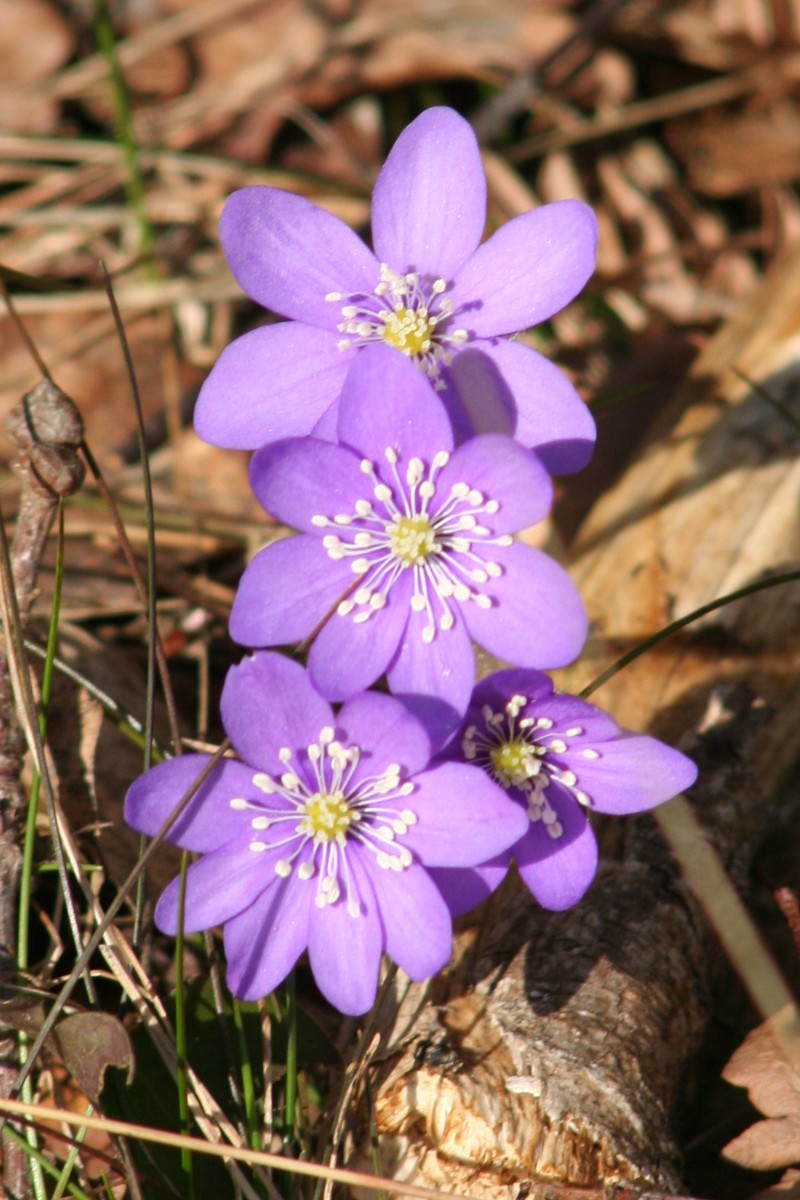
Common hepatica grows in deciduous woods and scrub in northern and central Europe, often on chalky soil; related forms occur in East Asia and North America. It is a small, slow-growing perennial about 10 cm tall, with three-lobed, leathery leaves that last through the winter. As early as February–April the flowers appear, usually sky blue to blue-violet, sometimes pink or white, with a centre full of white stamens. The new leaves only unfold after flowering. If you are patient, after a few years you get a full clump that flowers every spring; in Japan countless special forms have been bred, including double-flowered ones.
Caution: The whole plant is poisonous, especially when fresh: the sap can irritate the skin and the plant is harmful if eaten. Keep young children and pets such as cats and dogs away, and wear gloves when you divide it or cut off leaves.
Light
Partial shade or shade
tolerates little sun
Moisture
Normal
no wet feet
Legal basis
Loam or clay
neutral to chalky
Hardiness
Fully hardy
down to -35 °C
Size
0.1 m
tall, 0.2 m wide
Flowering
February–April
| Pruning months | February |
|---|---|
| Height | 0.1 m |
| Native to Belgium | No, planted |
| Good for bees, butterflies and birds | Yes, for bees |
| Poisonous to people and pets | Yes, take care with children and pets |
| Flowering | February–April |
Identify
Common hepatica: how do you recognise it?
- Habit
- Low, compact clump 10 cm tall and about 20 cm wide that grows very slowly.
- Leaves
- Three-lobed, leathery and long-stalked, dark green, sometimes marbled; the old leaves remain until after flowering.
- Flower
- Star-shaped flowers of 1.5–2.5 cm on short stalks, from February to April; they close at night and in dull weather.
- Colour
- Usually blue to blue-violet, sometimes pink or white, with white stamens.
- Curiosity
- What look like petals are coloured tepals; the three small green leaves beneath them look like a calyx.
- Roots
- A short rhizome with many fine roots; it dislikes disturbance.
Flowering: February–April · Plants: March–April and September–October · Pruning: February
In your garden
Why grow it?
- One of the first flowers of the year: blue stars from February onwards.
- Grows in shade and partial shade, under deciduous shrubs and trees.
- Early bees find pollen on it when little else is in flower.
- The leathery leaves last through the winter.
- Very long-lived: a plant in the right spot lasts for many years.
- Small and delicate: ideal for a shady rock garden, under shrubs or in a woodland border.
Common hepatica: where does it grow best?
- Partial shade to shade, for example under deciduous shrubs: light in spring, shade in summer.
- Humus-rich, chalky to neutral soil: loam or clay with plenty of leaf mould. It struggles on acid, sandy soil.
- Evenly moist: it should not dry out in summer, but should not have wet feet either.
- Plant 15–20 cm apart, at the front of a shady border or between stones, where vigorous neighbours cannot swamp it.
- Light
- Partial shade and shade
- Soil type
- Loam or clay
- Acidity
- Neutral or chalky
- Moisture
- Normal
- Size
- 0.1 m tall, 0.2 m wide
- Hardiness
- Hardy (to -35 °C)
Goes well with
- Lenten rose: Flowers at the same time and likes the same chalky, humus-rich soil.
- Snowdrop: White beside the blue, in the same shade under shrubs.
- Wood anemone: White stars in March–April, also a woodland plant.
- Lungwort: Blue and pink flowers and spotted leaves, in the same partial shade.
- Ferns: They take over the spot in summer as a green backdrop.
Maintenance
Common hepatica: when and how to plant it?
Plant in March–April and September–October.
- Plant in March–April or in September–October, preferably a pot-grown plant with a full root ball.
- Dig a hole twice as wide as the root ball and mix in leaf mould or well-rotted compost; on acid soil, add a little lime as well.
- Set the plant at the same depth as it was in the pot; the heart with its buds must stay clear of soil.
- Leave 15–20 cm between plants.
- Water in straight away and keep the soil moist during the first year.
- Spread a thin layer of leaf mould as a mulch and simply leave fallen leaves in place in autumn.
Care
- Water
- Regularly in the first year. After that, only during long dry spells in summer.
- Feeding
- No chemical fertiliser; a thin layer of leaf mould or compost in autumn is enough.
- Fallen leaves
- Leave the leaves of shrubs and trees where they fall: they form the humus-rich woodland soil it loves.
- Old leaves
- In February, cut away old, damaged leaves so the flowers show better.
- Leave it be
- Move or divide it as little as possible: it is slow to recover.
Tip: Simply leave the fallen leaves of shrubs and trees in place in autumn and do not move the plant: after a few years you get a full clump that flowers freely every spring.
Common hepatica: when to prune it?
Pruning months: February.
When: No pruning is needed. In February, just before or as flowering starts, you can cut away old and damaged leaves.
How:
- Cut old, brown or damaged leaves off at the base; healthy leaves can stay.
- Take care not to damage the flower buds in the heart of the plant.
- Leave spent flowers in place: that way it can set seed.
Caution: Wear gloves when you work on the plant: the fresh sap can irritate the skin.
Propagation
- Seed
- The seed ripens in May–June. Sow it fresh straight away in a pot of humus-rich compost and leave it outdoors in the shade; it often only germinates the following spring and flowers after a few years.
- Division
- In September you can carefully divide large, old clumps into pieces with enough roots and buds. They need time to recover.
Common hepatica: how does it get through the winter?
Hardy to −35 °C.
- Very hardy, to about −35 °C: no protection is needed in Belgium.
- The leaves stay through winter; the flower buds are already waiting in the heart of the plant.
- A layer of fallen leaves protects the plant and feeds the soil.
- In a pot: stand it in the shade against a wall in winter and do not let the compost dry out.
Diseases and pests
- Slugs: They eat flower buds and young leaves in spring. Pick them off in the evening.
- Sulking: It grows poorly after being moved or divided. Move it as little as possible and keep the soil moist.
- Drying out: Brown, scorched leaves in summer: too much sun or drought. Choose a shadier spot and mulch with leaf mould.
- Root rot: In wet, compacted soil the rhizome rots. Make sure the soil is open and rich in humus.
- Smothering: Vigorous neighbours take its light. Keep its spot free of spreading plants.
Through the year
- January: Rest. The leaves stay in place.
- February: Cut away old, damaged leaves. The first flowers appear.
- March: Full flower. Watch for slugs. Plant.
- April: Last flowers. The new leaves unfold. Plant.
- May: The seed ripens. Sow at once.
- June: Water during long dry spells.
- September: Plant. Carefully divide if needed.
- October: Plant. Leave fallen leaves in place.
- November: Give a thin layer of leaf mould.
Use
Edible and useful
Not edible. All parts of these spring flowers are poisonous, especially when fresh: when the plant is damaged it releases protoanemonin, an acrid compound also found in buttercups, which causes a burning feeling in the mouth, vomiting and stomach ache, and redness and small blisters on the skin. In spring, do not pick leaves of wood anemone, yellow wood anemone, hepatica or pasqueflower as greens for rabbits or guinea pigs: they can become seriously ill. Hepatica and pasqueflower were once used as remedies; do not make teas or preparations from them yourself. Keep young children, dogs and cats away, do not let children put the flowers in their mouths, and wear gloves when moving and dividing. If any is swallowed, call a poison centre (in Belgium 070 245 245) or your doctor at once.
Good for wildlife
- Bees
- Nectar and pollen for honeybees and wild bees.
You and this species
Did you know?
- The name Hepatica comes from the Greek hepar, liver: people thought the three-lobed leaf looked like a liver.
- The flowers open during the day and close in the evening and when it rains.
- The seed has a fatty appendage that attracts ants: they carry it off and so help the plant spread.