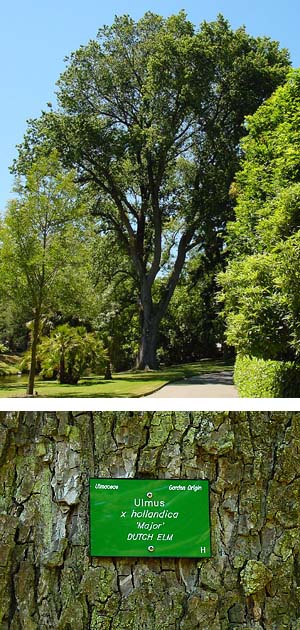
Photo: Wouter Hagens at Dutch Wikipedia, CC BY-SA 3.0 · source

Pruning guide · Broadleaf tree
Dutch elm: when and how to prune
Ulmus × hollandica
Dutch elm is best pruned in November–February.
| Pruning months | November–February |
|---|---|
| Nesting season (15 March–15 August) | Outside it |
| Flowering | March |
| Native to Belgium | Yes |
Dutch elm: when to prune it?
Only in winter (November–February).
Prune while dormant, from November to March, but not in freezing weather.
What else to prune in those months? January · February · November · December
Dutch elm: how to prune it?
- In spring and summer, fresh pruning wounds attract the elm bark beetle: so never prune during the growing season.
- Give a young tree a single central leader and raise the crown of an avenue tree gradually.
- Remove diseased branches, burn or shred them, and disinfect your tools.
How much to cut, and how often?
- One pruning period a year: November–February.
- Never remove more than about a quarter of the crown at once. Better a little every year.
What does it mean for wildlife?
- The pruning months fall outside the nesting season (15 March–15 August), so you won’t disturb nesting birds.
- As a native plant, it feeds more insects than a non-native species.
- Prunings can go on a dead hedge or brash pile in a corner of the garden: shelter for hedgehogs, wrens and insects.
Common mistakes
- Leaving a stub or sawing flush with the trunk: cut just outside the branch collar.
Caution: Don’t stack elm firewood with the bark still on: the elm bark beetle breeds in the bark of dead elm wood.
Nearby: related pruning guides
Similar to: Difference from field elm · Difference from wych elm
This guide is compiled from the Bladwijzer plant profile and pruning calendar.