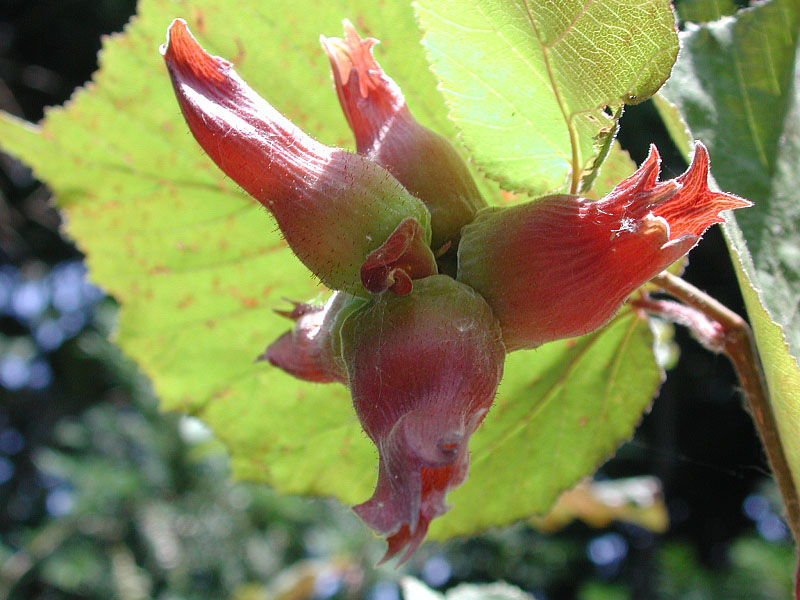
Photo: Fritz Geller-Grimm, CC BY-SA 2.5 · source

Pruning guide · Shrub
Filbert: when and how to prune
Corylus maxima
Filbert is best pruned in November–March.
| Pruning months | November–March |
|---|---|
| Nesting season (15 March–15 August) | Take care in March |
| Flowering | February–March |
| Native to Belgium | No, planted |
Filbert: when to prune it?
In winter (November–March), preferably after the catkins have flowered.
Prune while dormant, from November to March, but not in freezing weather.
What else to prune in those months? January · February · March · November · December
Filbert: how to prune it?
- Every year, saw a few of the oldest branches off at ground level: the shrub stays young and productive.
- Every 7–10 years you can coppice the whole shrub; it regrows from the base, but then gives few or no nuts for a few years.
- Remove thin, weak and crossing shoots to let light into the shrub.
How much to cut, and how often?
- One pruning period a year: November–March.
- Can be cut back to just above the ground every few years and will then regrow.
- Prune in moderation: never remove more than about a third of the shrub at once.
What does it mean for wildlife?
- Pruning in March can fall in the nesting season (15 March–15 August). Check carefully for nesting birds first: disturbing an active nest is against the law.
- Prunings can go on a dead hedge or brash pile in a corner of the garden: shelter for hedgehogs, wrens and insects.
Common mistakes
- Clipping without first checking for nesting birds.
- Leaving a stub or sawing flush with the trunk: cut just outside the branch collar.
Caution: Don’t prune during the nesting season (mid-March to mid-August) if birds are nesting in the shrub.
Nearby: related pruning guides
Similar to: Difference from hazel
This guide is compiled from the Bladwijzer plant profile and pruning calendar.