Photo: Wikimedia Commons, CC BY-SA 3.0 · source

Herb · Poaceae
Lemongrass
Cymbopogon citratus
In other languages: Citroengras (Nederlands) · Citronnelle (Français)
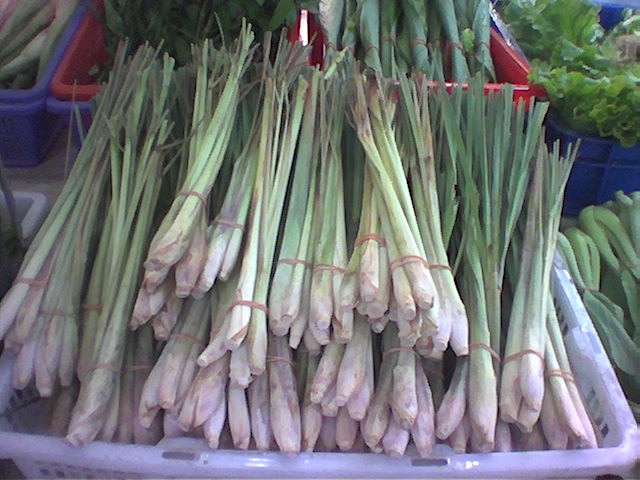
Lemongrass is a tropical perennial grass from South-East Asia that has been used in cooking for centuries. It forms dense clumps of long, narrow, blue-green leaves that arch gracefully and smell strongly of lemon when crushed. At the base are thickened, pale stems: these are cut for soups, curries and other Asian dishes. It is not hardy in our climate, so you grow it in a pot that stands outdoors in summer and indoors in winter. In our part of the world it rarely flowers.
Light
Full sun
warm and bright
Moisture
Normal
no wet feet
Legal basis
Sand or loam
acid to neutral
Hardiness
down to 5 °C
protect in harsh winters
Size
1 m
tall, 0.6 m wide
| Pruning months | April and September |
|---|---|
| Height | 1 m |
| Native to Belgium | No, planted |
| Poisonous to people and pets | Not known to be poisonous |
Identify
Lemongrass: how do you recognise it?
- Habit
- Dense, upright clump about 1 m tall and 60 cm wide, with arching leaves.
- Leaves
- Long, narrow and strap-like, blue-green, with rough, sharp edges.
- Stems
- Thickened, pale stem base 1–2 cm thick: the part you use in the kitchen.
- Scent
- Fresh and lemony, from all the leaves and stems.
- Flowering
- It rarely if ever flowers in our climate.
- Roots
- Fine, dense root ball that soon fills a pot.
Harvest and fruit: July–October · Plants: May–June · Pruning: April and September
In your garden
Why grow it?
- Fresh lemon flavour for soups, curries, stir-fries, marinades and tea.
- A graceful, tropical-looking clump for a sunny patio.
- Easy to propagate: fresh stalks from the shop often root in a glass of water.
- The leaves release a fresh lemon scent every time you brush past.
- A fast grower: one plant gives stalks to harvest all summer.
Lemongrass: where does it grow best?
- Full sun and warmth: in summer on a sunny, sheltered patio.
- Open, free-draining potting compost with some sand; in open ground, sand or loam, acid to neutral.
- Evenly moist in summer, but never standing in water.
- Outdoors only after mid-May, when nights stay above 10 °C; bring it in before it turns cooler in September.
- A pot at least 30 cm across per plant.
- Light
- Sun
- Soil type
- Sand or loam
- Acidity
- Acid or neutral
- Moisture
- Normal
- Size
- 1 m tall, 0.6 m wide
- Hardiness
- Frost tender: overwinter indoors (above 5 °C)
Goes well with
- Basil: Also loves warmth and sun, and belongs in the same kitchen.
- Chilli pepper: Colourful fruits beside the green grass, together on a warm patio.
- Lemon verbena: Another lemon scent for tea; it also overwinters frost-free.
- Coriander: A classic herb for the same Asian dishes.
Maintenance
Lemongrass: when and how to plant it?
Plant in May–June.
- Pot up a young plant in April–May and put it outside from mid-May or in June.
- Choose a pot at least 30 cm across with a drainage hole and a layer of gravel or clay pebbles in the bottom.
- Use good potting compost mixed with a third of sand or perlite.
- Set the plant at the same depth as in its old pot and firm lightly.
- Water well and let the excess drain away.
- If you plant it in open ground for the summer, lift it again in September and pot it up.
Care
- Watering
- Water regularly in summer: the compost can stay lightly moist. In winter much less, only when the top few centimetres are dry.
- Feeding
- From May to August, liquid organic feed every two weeks; none in winter.
- Harvesting
- From July, cut thick stalks at the base, or twist off an outer shoot. Use the bottom 10–15 cm; the leaves can go into tea.
- Overwintering
- Bring the pot in during September, before nights drop below 10 °C. Keep it bright and cool, at 10–15 °C.
- Repotting
- Repot or divide every spring: the clump soon fills its pot.
Tip: Buy a few fresh stalks with the base still on and stand them in a glass of water: after a few weeks you will have roots and a new plant. Put it outside in full sun for the summer and bring it back in during September.
Lemongrass: when to prune it?
Pruning months: April and September.
When: Prune in April, when growth starts again. When you bring it in during September, you can shorten the long leaves.
How:
- In April, cut all the leaves back to 15–20 cm above the pot; fresh leaves soon follow.
- Remove dead, brown leaves at the base.
- In September, shorten the long leaves by about half so the plant takes up less room indoors.
- In summer, simply snip off brown leaf tips.
Caution: Wear gloves: the leaf edges are sharp and can cut your fingers.
Propagation
- Division
- In April–May: take the clump out of its pot, split it into pieces each with a few stalks and roots, and pot them up separately.
- Shop-bought stalks
- Stand fresh stalks with an intact base in a glass with a few centimetres of water, in a bright, warm place. Roots appear after 2–4 weeks; then pot them up.
Lemongrass: how does it get through the winter?
Hardy to 5 °C: protect in harsh winters.
- Not hardy: below 5 °C the plant is damaged. Bring it in during September.
- Overwinter in good light at 10–15 °C, for example in a cool room or a frost-free greenhouse, close to the window.
- In winter give little water and no feed; the plant barely grows.
- A few brown leaf tips in winter are normal; trim them off in spring.
Diseases and pests
- Red spider mite: Fine webbing and speckled leaves, especially indoors in dry air. Spray the leaves regularly with lukewarm water.
- Root rot: A yellow, limp clump in a cold, wet pot. Water less in winter and use free-draining compost.
- Brown leaf tips: Caused by dry air or too little water. Trim them off and water more regularly in summer.
- Poor growth: Too little light, warmth or food. Put the plant in full sun in summer and feed regularly.
Through the year
- January: Indoors, bright and cool. Little water.
- February: Indoors. Watch for red spider mite.
- March: Water a little more as growth starts.
- April: Cut back to 15–20 cm. Repot or divide.
- May: Outside from mid-May. Start feeding.
- June: Outdoors in the sun. Regular water and feed.
- July: First stalks to harvest.
- August: Harvest. Water and feed.
- September: Bring in before nights drop below 10 °C. Shorten long leaves if needed.
- October: Indoors in a bright spot. Less water.
- November: Rest. No feed.
- December: Rest. Little water.
Use
Edible and useful
- Stems (July–October)
- From July to October, cut the thickest stems just above the soil; the lower, white part (10 to 15 cm) is the most tender. Peel off the tough outer leaves. Bruise the stem for soups and curries and remove it after cooking, or slice the soft heart very finely. The green leaves make a tea.
- Storing
- Fresh stems keep for 2 weeks in the fridge in a bag, or for months in the freezer (sliced or whole). The leaves can be dried in pieces for tea and kept in a closed jar. Lemongrass is not hardy: bring the pot indoors to a light spot before the frost and water sparingly.
Caution: In normal amounts as a herb or tea, lemongrass is safe; during pregnancy do not drink large amounts, and never swallow the essential oil. The leaf edges are razor-sharp: wear gloves when cutting it.
Eating and using is at your own risk: see the terms of use.
Recipes
- Lemongrass and ginger tea (Tea · 1 teapot (± 750 ml) · 15 min)
- Coconut soup with lemongrass (tom kha) (Dish · 4 people · 30 min)
You and this species
Did you know?
- The lemon scent comes from citral, an aromatic compound also found in lemon peel.
- Citronella grass, whose oil goes into insect-repellent candles, is a related but different species.
- Because lemongrass hardly ever flowers here, it is almost always propagated by division.