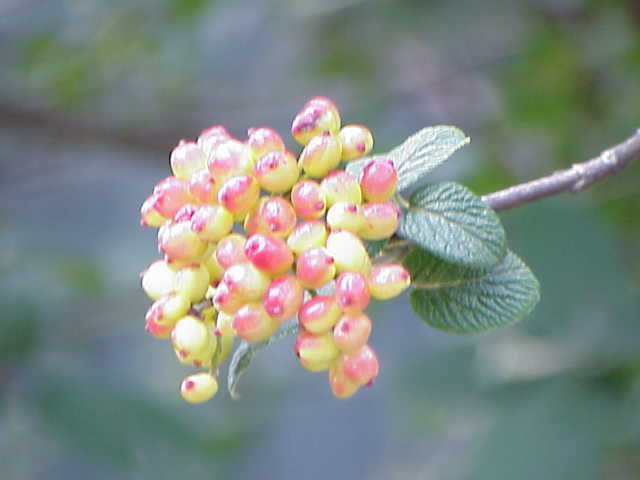
Photo: Kurt Stüber [1], CC BY-SA 3.0 · source

Pruning guide · Shrub
Wayfaring tree: when and how to prune
Viburnum lantana
Prune a wayfaring tree lightly, after flowering, in June–July: thin out one or two of the oldest branches at the base, and don’t cut everything back, or there will be no berries.
The wayfaring tree (Viburnum lantana) is a native shrub of 2–4 m for dry, chalky soil, with grey, felted leaves and twigs, creamy-white flower heads and berries that turn from green through red to black, often all at once. It naturally grows in a loose shape and renews itself from the base. It needs little pruning: clip it all over and you get few flowers and no berries. In the wild it is rare, so a shrub in the garden is a real asset.
| Pruning months | June–July |
|---|---|
| Nesting season (15 March–15 August) | Take care in June–July |
| Flowering | April–May |
| Native to Belgium | Yes |
| Poisonous to people and pets | Yes, take care with children and pets |
Wayfaring tree: when to prune it?
Prune after flowering, in June–July. The flowers for next year come on the wood that grows afterwards.
In winter, cut off the twig tips where the viburnum beetle has laid its eggs: that isn’t pruning, but pest control.
Don’t prune in autumn or winter: you would cut off the berries and the flower buds.
Wayfaring tree: how to prune it?
- Thin out at the base: every few years, saw one or two of the oldest branches off as low as possible, so young shoots come through.
- Cut overlong branches back to a side branch pointing outwards, not just to length.
- Remove dead, weak and crossing branches.
- If you see rows of small, dark bumps on the underside of the twig tips in winter, cut those tips off and put them in the household waste.
- Rejuvenate an old, bare shrub over two or three years: each time after flowering, part of the oldest branches at the base.
How much to cut, and how often?
- Little: one or two old branches every few years, and each year only what is in the way.
- Whatever you cut off after flowering won’t bear berries: so don’t cut everything back.
What does it mean for wildlife?
- June–July falls in the nesting season (15 March–15 August). Whitethroats, dunnocks and blackbirds like to nest in the shrub: look carefully before pruning, and spare an active nest.
- The flat flower heads in May–June are full of bees, hoverflies and beetles.
- The berries feed blackbirds, thrushes and robins in summer and autumn. For people they are mildly poisonous.
- The viburnum beetle sometimes eats the leaves into lace. The shrub survives, and birds eat the larvae: only control it by cutting off the eggs in winter.
Common mistakes
- Clipping the shrub all over, so it hardly flowers and bears no berries.
- Pruning in autumn and removing the berries meant for the birds.
- Never removing old wood, so the shrub becomes bare and grey.
- Pruning without first checking for nests.
Caution: June–July falls in the nesting season: check for nesting birds in the shrub before you prune. Wayfaring tree is poisonous: wear gloves and keep clippings away from children, pets and livestock.
Nearby: related pruning guides
Similar to: Difference from guelder rose · Difference from Japanese snowball · Difference from leatherleaf viburnum
Plant profile: Wayfaring tree · Pruning calendar and basic rules