Side by side
Japanese snowball or wayfaring-tree? How to tell them apart
Viburnum plicatum · Viburnum lantana
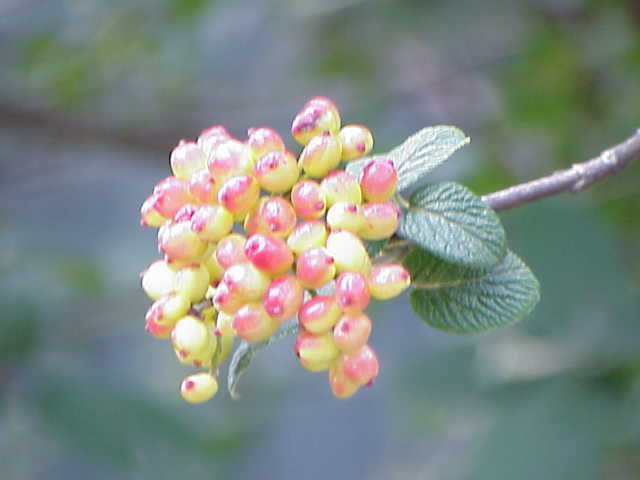
How to tell them apart – Japanese snowball: broad shrub with horizontal, tiered branches that are covered on top with white flower heads in May; wayfaring-tree: felted leaves, no outer florets and an upright habit.
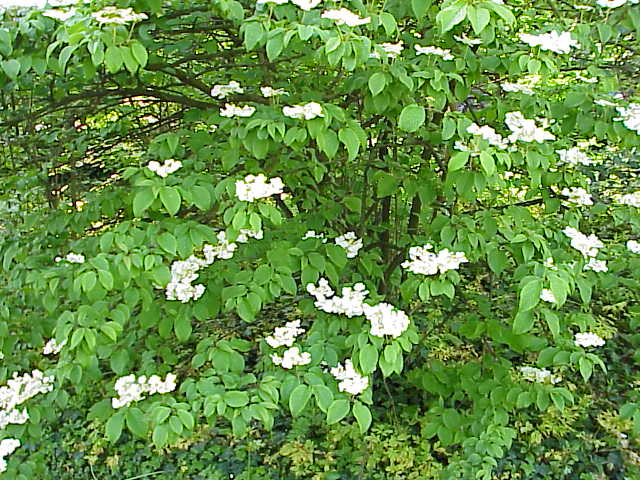


How do you recognise them?
- Japanese snowball
- Broad shrub with horizontal, tiered branches that are covered on top with white flower heads in May.
- Wayfaring-tree
- Shrub with thick, wrinkled leaves that are felted underneath, flat white flower heads in May and berries that turn from green through red to black.
- Compared with Japanese snowball: felted leaves, no outer florets and an upright habit.
| Japanese snowball | Wayfaring-tree | |
|---|---|---|
| Leaves | Opposite, 5–10 cm, oval, toothed, with deeply impressed, parallel side veins; wine-red autumn colour. | Opposite, 5–10 cm, oval, finely toothed, thick and wrinkled; underside grey-felted with star-shaped hairs. |
| Flowering | In the most widely planted forms, flat heads ringed with large white sterile florets, in May–June, in two rows along the top of the branches; in the ‘snowball form’, rounded heads of sterile flowers only (May–June). | Flat heads (6–10 cm) of small, creamy white flowers, without large outer florets, in May–June (April–May). |
| Fruit | Small berries that turn from red to black, in summer. | Flattened, oval berries that turn from green through red to glossy black, often all colours at once in a single head (August–September); mildly poisonous. |
| Bark | Greyish-brown, horizontally spreading branches. | Young twigs and buds grey-felted; older branches greyish-brown. |
| Shape and height | Shrub, 2–3 m | Shrub, 2–4 m |
| Site | Sun or partial shade, any garden soil, normal | Sun or partial shade, any garden soil, dry |
| Native to Belgium | No, planted | Yes |
| Good for bees, butterflies and birds | – | – |
| Poisonous to people and pets | Not known to be poisonous | Yes, take care with children and pets |
| Pruning months | June–July | June–July |
What does it mean for your garden?
- Wayfaring-tree is poisonous to people and pets: take care with children and animals.
- Wayfaring-tree is native: it feeds more insects and birds than a non-native species. If in doubt, choose this one.
Read on
- Plant profile: Japanese snowball
- Plant profile: Wayfaring-tree
- Japanese snowball: when and how to prune
- Wayfaring-tree: when and how to prune
- Identification key
Also looks like
This comparison is compiled from the Bladwijzer species pages.