Side by side
Ash or Japanese pagoda tree? How to tell them apart
Fraxinus excelsior · Styphnolobium japonicum
How to tell them apart – ash: opposite leaf with toothed leaflets and black buds; Japanese pagoda tree: pinnate leaf with 7–17 pointed, untoothed leaflets and green twigs, in late summer creamy flower panicles and pods like strings of beads.
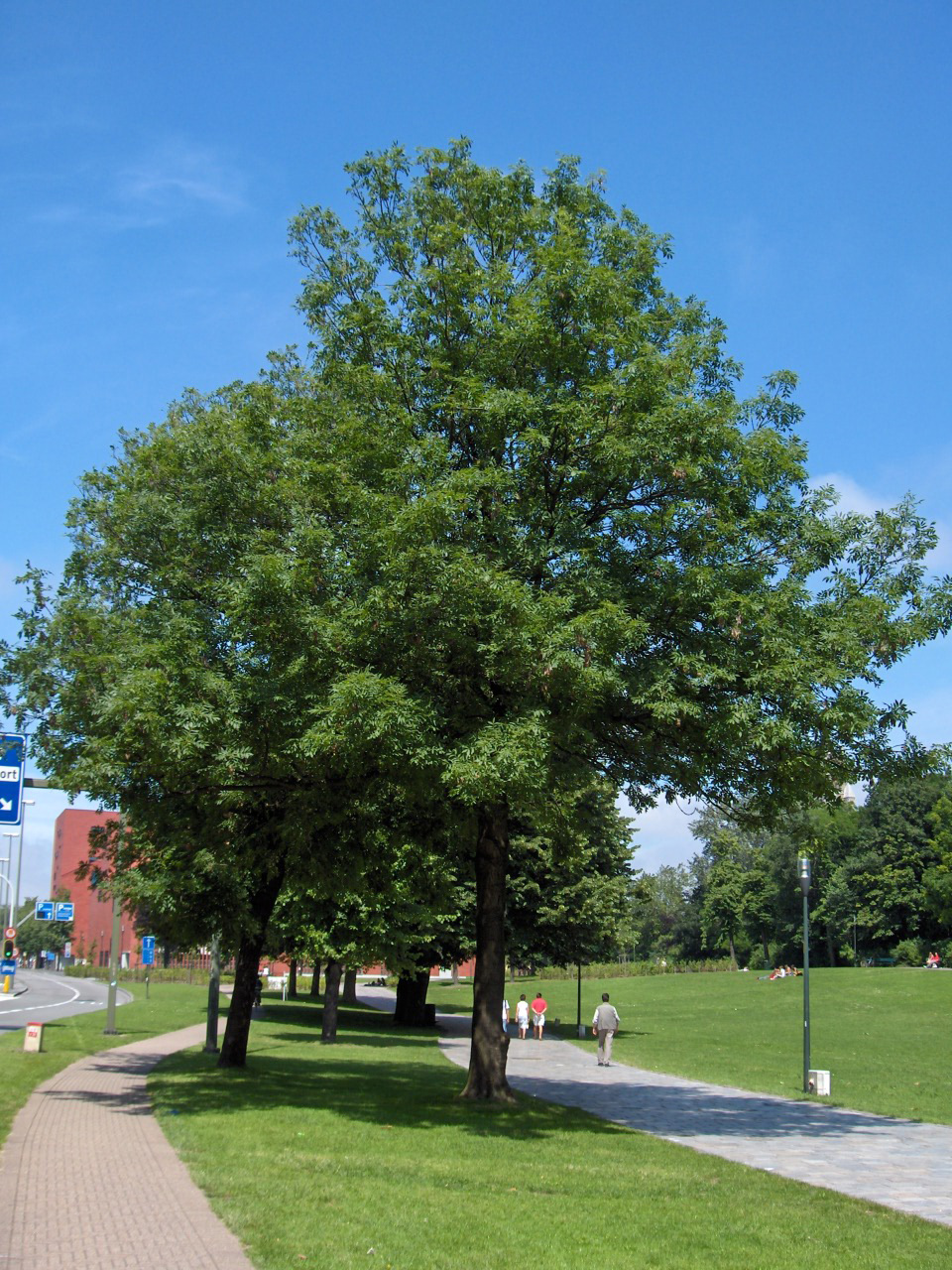


How do you recognise them?
- Ash
- Opposite pinnate leaves with 9–13 leaflets and thick, matt black buds.
- Compared with Japanese pagoda tree: opposite leaf with toothed leaflets and black buds.
- Japanese pagoda tree
- Pinnate leaf with 7–17 pointed, untoothed leaflets and green twigs; in late summer creamy flower panicles and pods like strings of beads.
| Ash | Japanese pagoda tree | |
|---|---|---|
| Leaves | Opposite, pinnate with 9–13 oblong, toothed leaflets. The leaves often fall while still green in autumn. | Alternate, pinnate, 15–25 cm, with 7–17 oval, pointed and untoothed leaflets 3–5 cm long and a terminal leaflet; underside blue-green. No spines. |
| Flowering | April | Large, upright panicles of creamy pea flowers in August–September; young trees do not flower yet (August–September). |
| Fruit | Clusters of winged fruits (‘keys’) that hang on well into winter. | Green, fleshy pods 5–8 cm long, constricted between the seeds like a string of beads; they hang on into winter. |
| Bark | Smooth and greenish-grey when young, later pale grey with a fine network of ridges. Buds velvety black. | Grey-brown and furrowed; young twigs strikingly dark green, even in winter. |
| Shape and height | Broadleaf tree, 20–35 m | Broadleaf tree, 15–25 m |
| Site | Sun or partial shade, any garden soil, moist to wet | Full sun, any garden soil, dry |
| Native to Belgium | Yes | No, planted |
| Good for bees, butterflies and birds | Yes, for butterflies and birds | – |
| Poisonous to people and pets | Not known to be poisonous | Yes, take care with children and pets |
| Pruning months | November–March | July–August and November–February |
What does it mean for your garden?
- Japanese pagoda tree is poisonous to people and pets: take care with children and animals.
- Ash is native: it feeds more insects and birds than a non-native species. If in doubt, choose this one.
- Ash (20–35 m) and Japanese pagoda tree (15–25 m) both grow into large trees: too big for an ordinary garden, but fine in a large garden, a park or a meadow.
Read on
- Plant profile: Ash
- Plant profile: Japanese pagoda tree
- Ash: when and how to prune
- Japanese pagoda tree: when and how to prune
- Identification key
Also looks like
- Ash or rowan
- Ash or elder
- Ash or tree of heaven
- Ash or manna ash
- Ash or box elder
- Japanese pagoda tree or false acacia
Identify by feature
This comparison is compiled from the Bladwijzer species pages.