Side by side
Ash or rowan? How to tell them apart
Fraxinus excelsior · Sorbus aucuparia
You can tell an ash by its pinnate leaves in opposite pairs and its fat, matt black buds; a rowan has alternate pinnate leaves with narrower leaflets, purplish-brown, felty buds and clusters of orange-red berries.
Both have pinnate leaves with 9–19 toothed leaflets. Look at how the leaves sit on the twig: in opposite pairs on the ash, alternating on the rowan. In winter the black buds give the ash away at once.
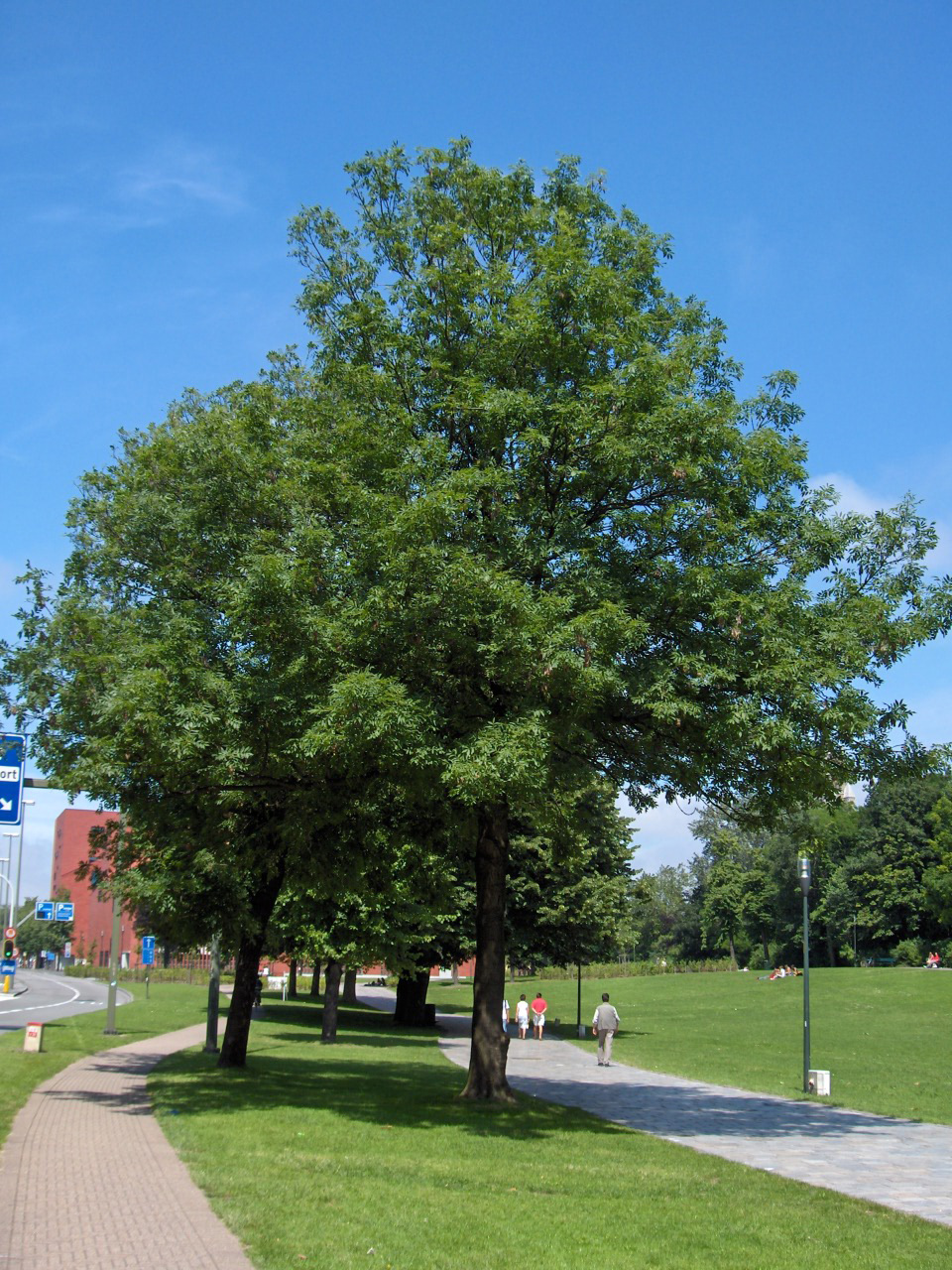


| Ash | Rowan | |
|---|---|---|
| Leaves | Opposite, pinnate with 9–13 oblong, toothed leaflets. The leaves often fall while still green in autumn. | Alternate, pinnate with 9–19 narrow, toothed leaflets. Buds purplish-brown and felted. |
| Flowering | April | Flat heads of white flowers in May (May). |
| Fruit | Clusters of winged fruits (‘keys’) that hang on well into winter. | Clusters of orange-red berries from August; a feast for thrushes. |
| Bark | Smooth and greenish-grey when young, later pale grey with a fine network of ridges. Buds velvety black. | Smooth, shiny silver-grey. |
| Shape and height | Broadleaf tree, 20–35 m | Broadleaf tree, 5–15 m |
| Site | Sun or partial shade, any garden soil, moist to wet | Sun or partial shade, acid soil, normal |
| Native to Belgium | Yes | Yes |
| Good for bees, butterflies and birds | Yes, for butterflies and birds | Yes, for bees and birds |
| Poisonous to people and pets | Not known to be poisonous | Not known to be poisonous |
| Pruning months | November–March | November–March |
The best feature in each season
- Spring
- The ash flowers in April with inconspicuous purplish-black tufts before the leaves; the rowan flowers in May with flat heads of small white flowers.
- Summer
- From August the rowan is laden with orange-red berries; the ash carries bunches of winged seeds, the keys.
- Autumn
- The rowan turns yellow to orange-red and its berries draw thrushes, blackbirds and starlings; ash leaves often fall while still green and the keys stay hanging.
- Winter
- The buds are unmistakable: fat, matt, velvety black and in opposite pairs on the ash; purplish brown, felty and alternate on the rowan. The rowan has smooth, glossy silver-grey bark.
Where do they grow?
Both are native. The ash likes moist, chalky soil, along streams, in hedgerows and as a pollard. The rowan prefers acid, light soil, as in the Campine, and grows along woodland edges and in open woods.
Which one for your garden?
- For a small garden the rowan is one of the best trees: a crown of about 6 m, flowers for bees and berries for birds. The ash reaches 20–35 m and is too big; as a pollard it does fit into a large garden.
- For now, better not to plant a new ash: ash dieback is killing many trees. Do spare healthy ashes, and have diseased trees near paths or buildings checked by a tree surgeon.
Did you know? In Dutch the rowan is named after the thrush: its berries were once used to lure thrushes into traps.
Read on
- Plant profile: Ash
- Plant profile: Rowan
- Ash: when and how to prune
- Rowan: when and how to prune
- Identification key: the question that separates them
Also looks like
- Ash or elder
- Ash or tree of heaven
- Ash or Japanese pagoda tree
- Ash or manna ash
- Ash or box elder
- Manna ash or rowan