Identify by feature
Tree or shrub with pinnate leaves: which one is it?
In Belgium and the Netherlands, a tree or shrub with pinnate leaves is usually an ash, an elder or a rowan; in parks, avenues and gardens it may also be a false acacia, a walnut or a box elder.
18 species with this feature
-
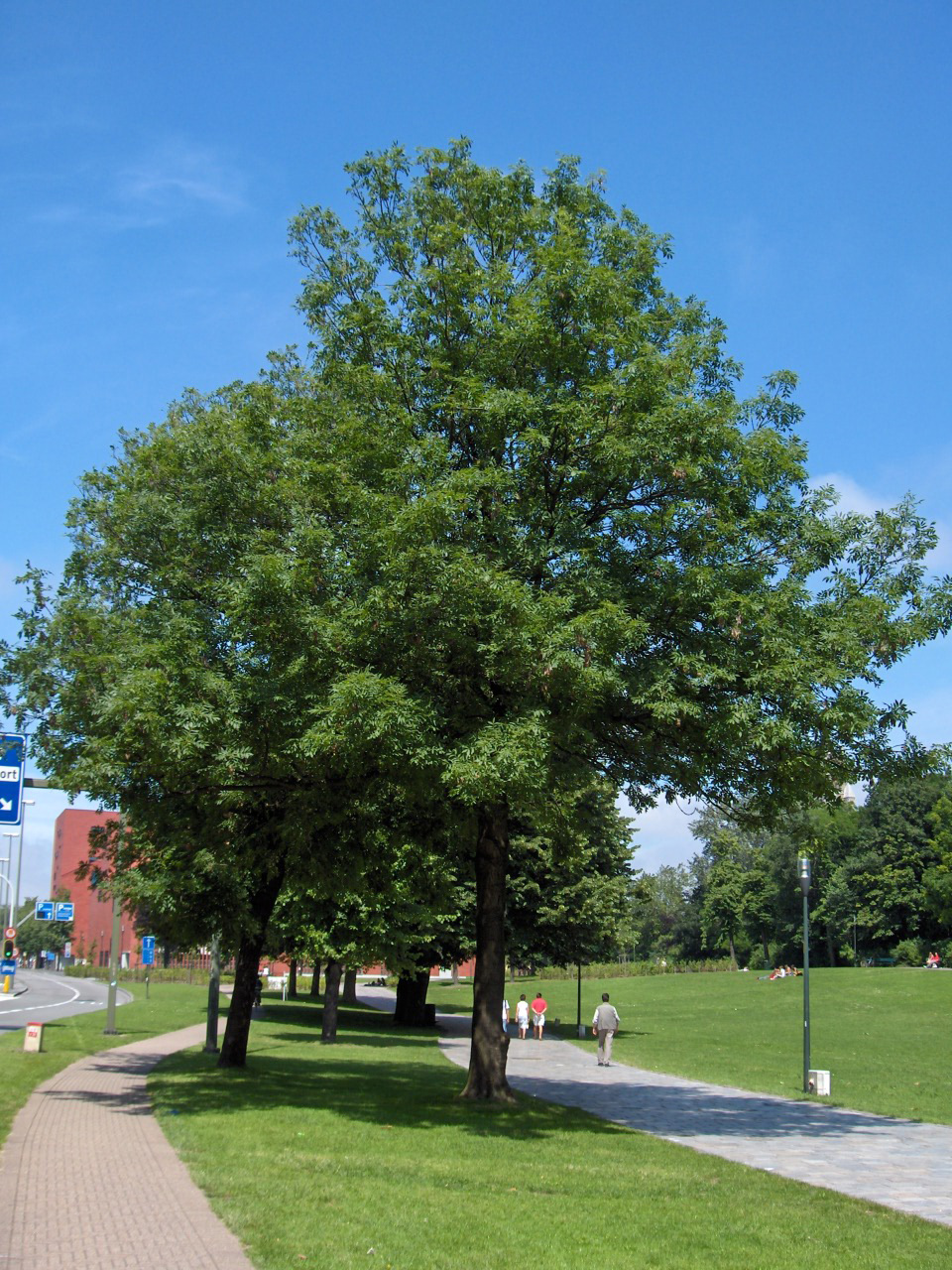
Ash Fraxinus excelsior
Broadleaf tree
Opposite, pinnate with 9–13 oblong, toothed leaflets. The leaves often fall while still green in autumn.
Native
-
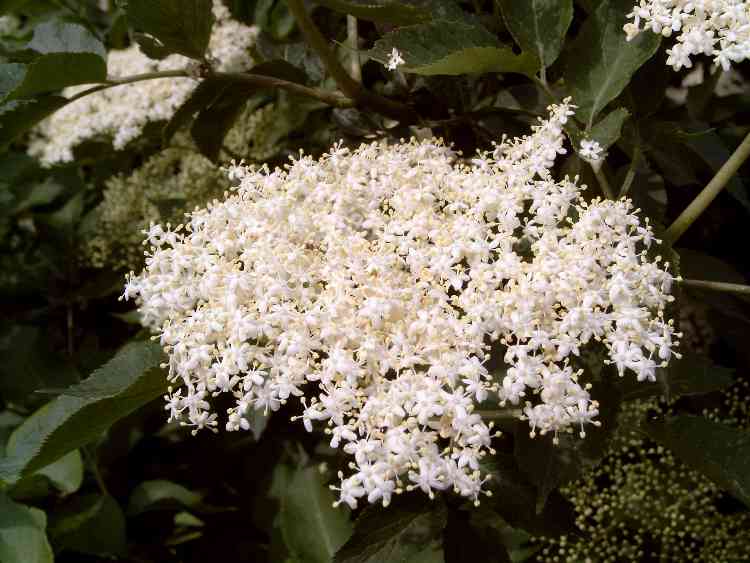
Elder Sambucus nigra
Shrub
Opposite, pinnate with 5–7 toothed, pointed leaflets. When crushed the leaf smells unpleasant.
Native
-
Rowan Sorbus aucuparia
Broadleaf tree
Alternate, pinnate with 9–19 narrow, toothed leaflets. Buds purplish-brown and felted.
Native
-
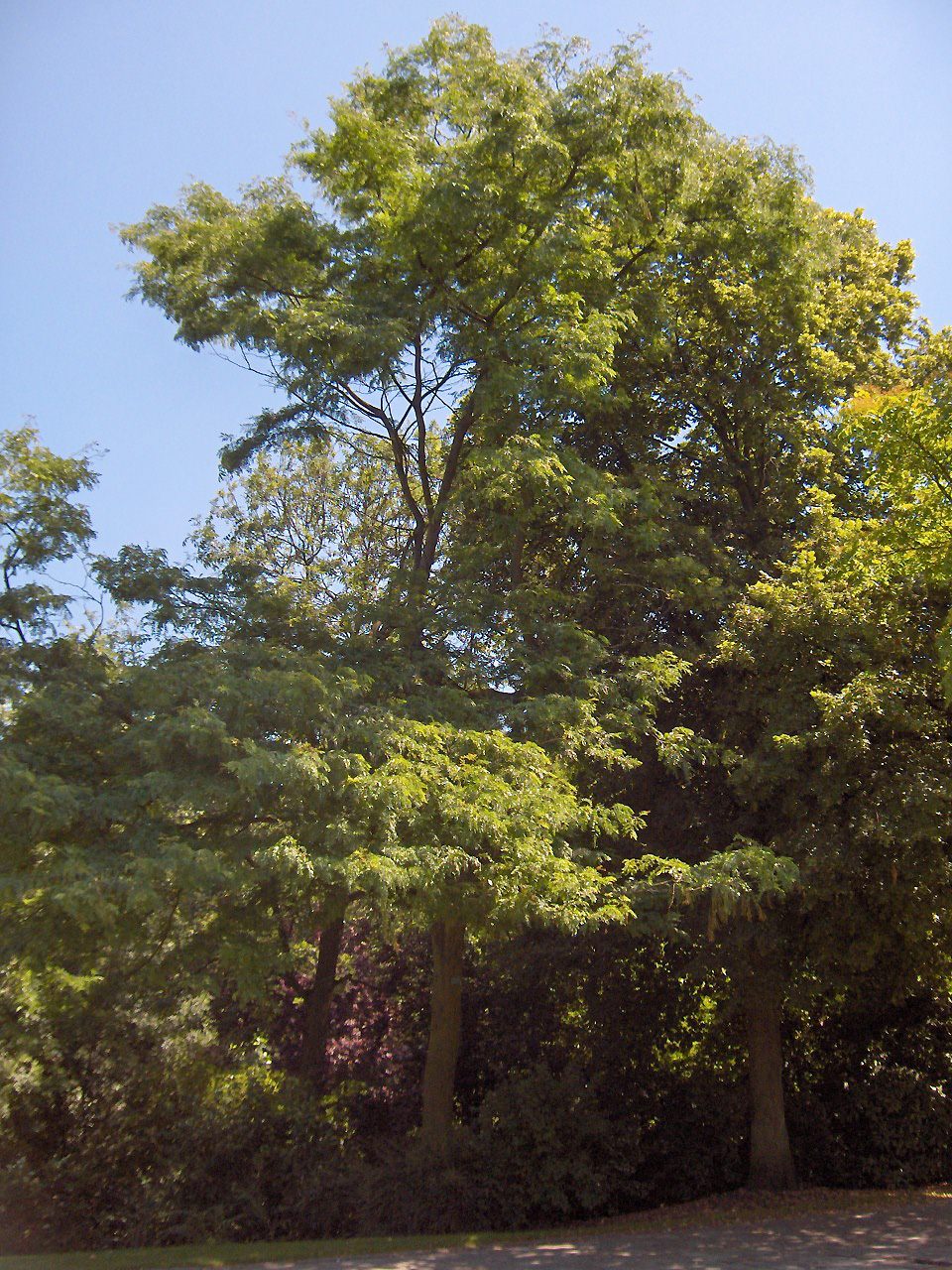
False acacia Robinia pseudoacacia
Broadleaf tree
Alternate, pinnate with 9–19 oval, smooth-edged leaflets and a terminal leaflet. Two sharp spines at the leaf base.
Invasive non-native: do not plantPoisonous
-
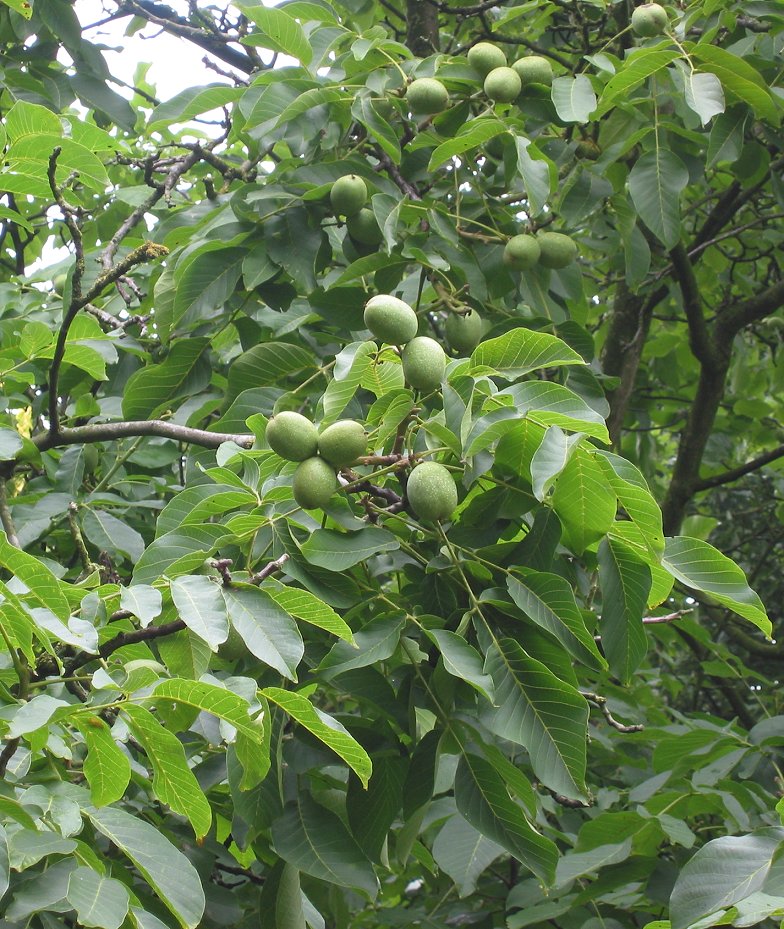
Walnut Juglans regia
Fruit tree
Alternate, pinnate with 5–9 large, smooth-edged leaflets; the terminal leaflet is the largest. When crushed it smells aromatic.
-
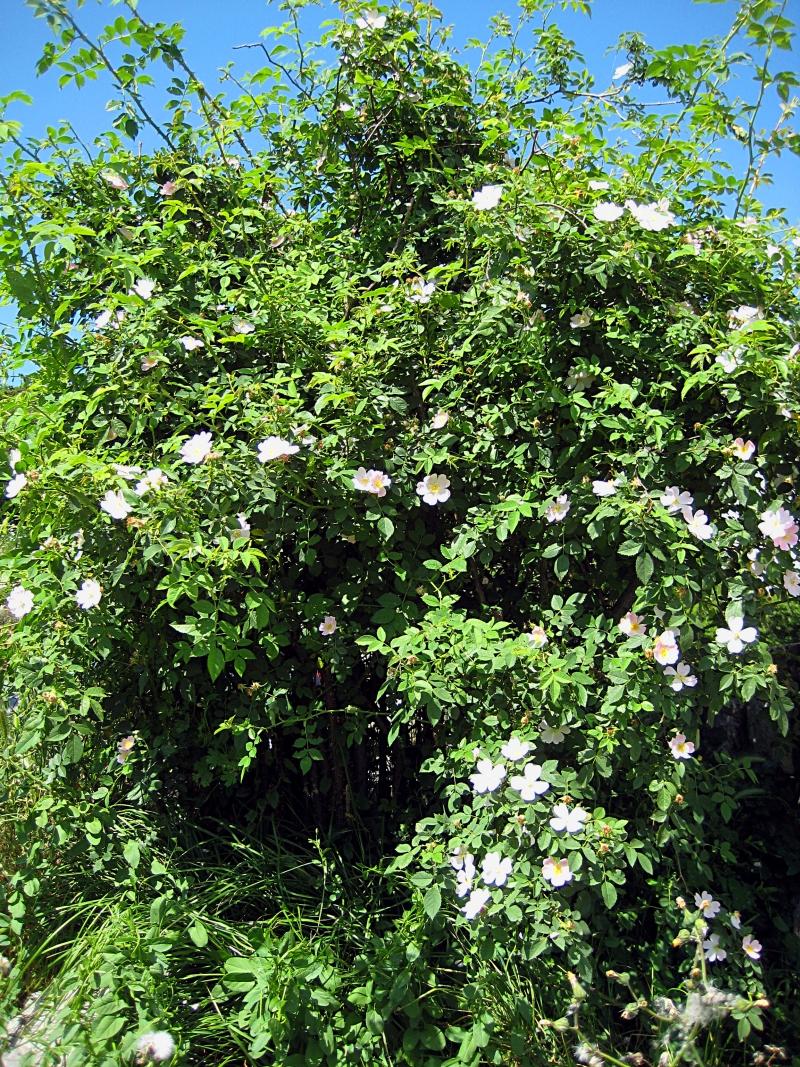
Dog rose Rosa canina
Shrub
Alternate, pinnate with 5–7 toothed leaflets; stipules at the base.
Native
-
Box elder Acer negundo
Broadleaf tree
Opposite, pinnate with 3–5 (sometimes 7) coarsely toothed or slightly lobed leaflets.
-
Honey locust Gleditsia triacanthos
Broadleaf tree
Alternate, pinnate or bipinnate with many (20–30) small leaflets 1.5–3 cm long, without a terminal leaflet.
-
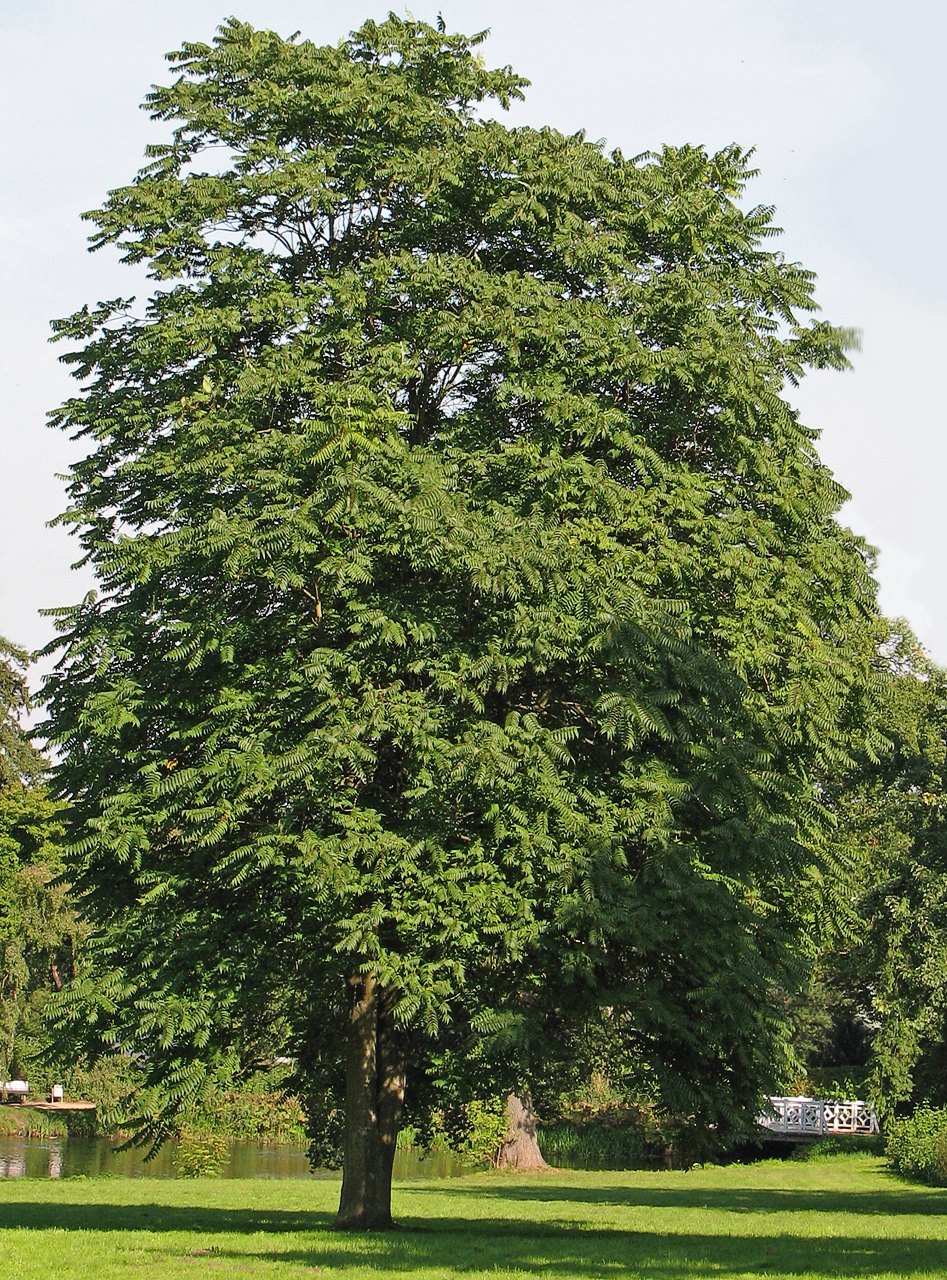
Tree of heaven Ailanthus altissima
Broadleaf tree
Alternate, pinnate, 40–90 cm long with 13–41 leaflets. These are untoothed apart from 1–3 coarse teeth near the base, with a small gland beneath.
Invasive non-native: do not plant
-
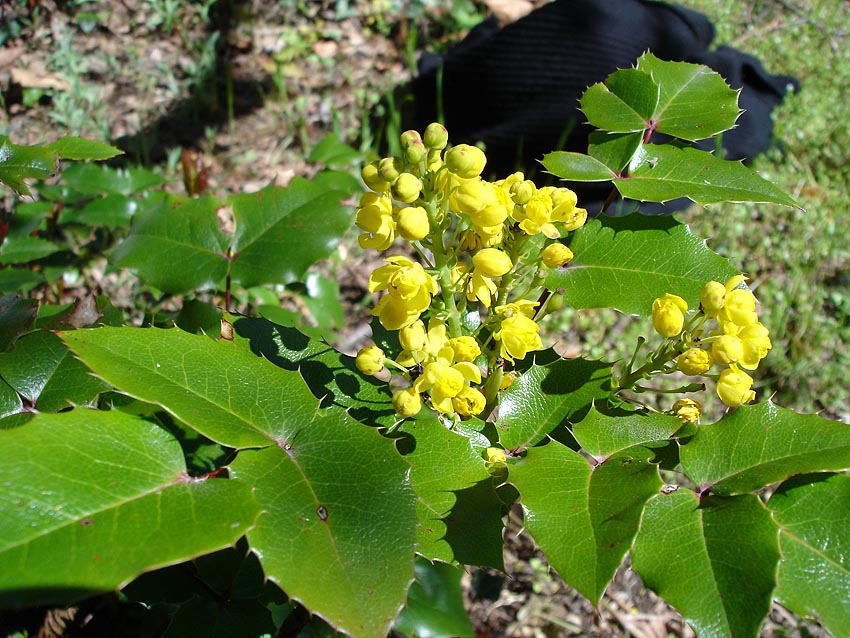
Oregon grape Berberis aquifolium
Shrub
Alternate, pinnate with 5–9 glossy, spiny-toothed leaflets; often reddish in winter.
-
Raspberry Rubus idaeus
Shrub
Alternate, pinnate with 3–5 (7) toothed leaflets; white-felted underneath.
Native
-
Red-berried elder Sambucus racemosa
Shrub
Opposite, pinnate with usually 5 pointed, sharply toothed leaflets; unpleasant-smelling when crushed.
NativePoisonous
-
Sweet-briar Rosa rubiginosa
Shrub
Alternate, pinnate with 5–7 small (1–3 cm), roundish, double-toothed leaflets; underside densely covered with sticky, reddish-brown glands that smell of apple.
Native
-
Manna ash Fraxinus ornus
Broadleaf tree
Opposite, pinnate, with 5–9 stalked, oval, toothed leaflets 5–10 cm long.
-
Japanese pagoda tree Styphnolobium japonicum
Broadleaf tree
Alternate, pinnate, 15–25 cm, with 7–17 oval, pointed and untoothed leaflets 3–5 cm long and a terminal leaflet; underside blue-green. No spines.
Poisonous
-
Golden rain tree Koelreuteria paniculata
Broadleaf tree
Alternate, pinnate to partly bipinnate, 15–35 cm, with 7–15 coarsely and irregularly toothed to deeply cut leaflets; reddish when young, yellow to orange in autumn.
-
Japanese rose Rosa rugosa
Shrub
Alternate, pinnate with 5–9 thick, deeply wrinkled, glossy leaflets; yellow autumn colour.
Invasive non-native: do not plant
-
Sacred bamboo Nandina domestica
Shrub
Alternate, up to 50 cm long, two to three times pinnate with narrow, pointed, untoothed leaflets (3–10 cm); red when young, often red to purple in winter.
Poisonous





Tip: First look at how the leaves sit on the twig: opposite in ash, elder and box elder, alternate in rowan, false acacia and walnut. Then count the leaflets and feel the edge.
Continue in the identification key
Torn between two?
- Ash or rowan
- Elder or red-berried elder
- Walnut or tree of heaven
- Sweet-briar or dog rose
- Dog rose or Japanese rose
- Ash or elder
- Ash or box elder
- Ash or tree of heaven
- Ash or manna ash
- Ash or Japanese pagoda tree
- Manna ash or rowan
- False acacia or honey locust
- Japanese pagoda tree or false acacia
- Golden rain tree or false acacia
- Raspberry or dog rose
- Golden rain tree or tree of heaven
- Sacred bamboo or Oregon grape