Side by side
Weigela or common honeysuckle? How to tell them apart
Weigela · Lonicera periclymenum
How to tell them apart – weigela: shrub with bell-shaped pink or red flowers in May–June; common honeysuckle: a climber.

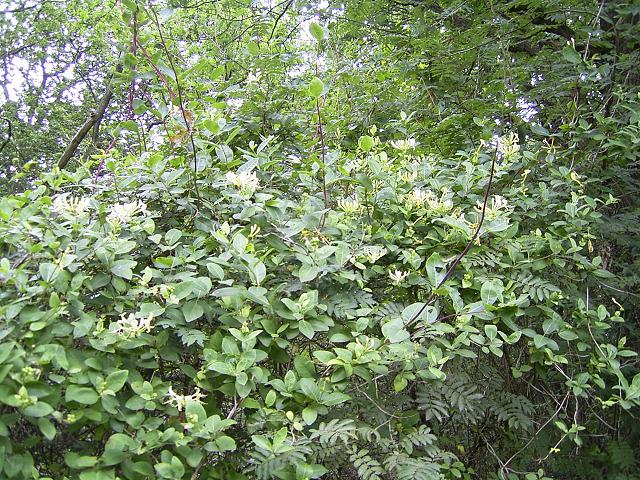


How do you recognise them?
- Weigela
- Shrub with bell-shaped pink or red flowers in May–June.
- Common honeysuckle
- Twining climber with opposite leaves and strongly scented, tubular flowers.
- Compared with weigela: a climber.
| Weigela | Common honeysuckle | |
|---|---|---|
| Leaves | Opposite, oval, 5–10 cm, toothed. | Opposite, oval, untoothed, 3–7 cm; bluish-green underneath. |
| Flowering | Trumpet-shaped pink, red or white flowers in May–June, sometimes a second flush (May–June). | Cream to reddish-yellow tubular flowers in whorls, June–September, strongly scented in the evening (June–September). |
| Fruit | Small capsules. | Glossy red berries, poisonous. |
| Bark | Greyish-brown. | Twining stems; old stems with peeling bark. |
| Shape and height | Shrub, 1.5–3 m | Climber, twines to 6 m |
| Site | Sun or partial shade, any garden soil, normal | Sun or partial shade, any garden soil, normal |
| Native to Belgium | No, planted | Yes |
| Good for bees, butterflies and birds | Yes, for bees | Yes, for bees, butterflies and birds |
| Poisonous to people and pets | Not known to be poisonous | Yes, take care with children and pets |
| Pruning months | June–July | February–March and August–September |
What does it mean for your garden?
- Common honeysuckle is poisonous to people and pets: take care with children and animals.
- Common honeysuckle is native: it feeds more insects and birds than a non-native species. If in doubt, choose this one.
Read on
- Plant profile: Weigela
- Plant profile: Common honeysuckle
- Weigela: when and how to prune
- Common honeysuckle: when and how to prune
- Identification key: the question that separates them
Also looks like
This comparison is compiled from the Bladwijzer species pages.