Side by side
Walnut or tree of heaven? How to tell them apart
Juglans regia · Ailanthus altissima
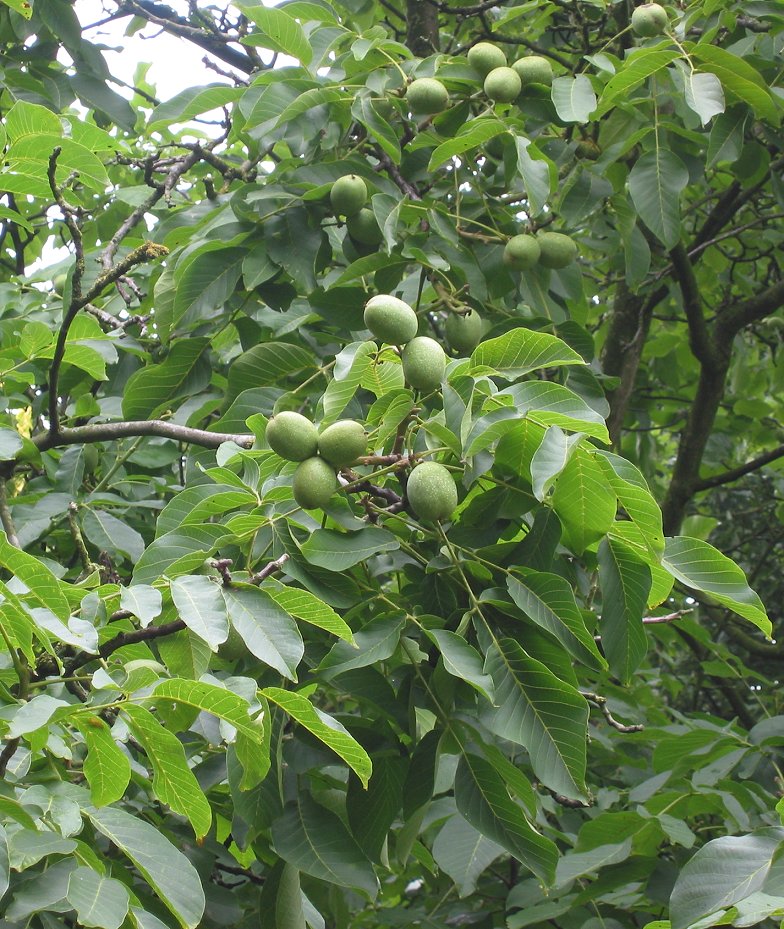
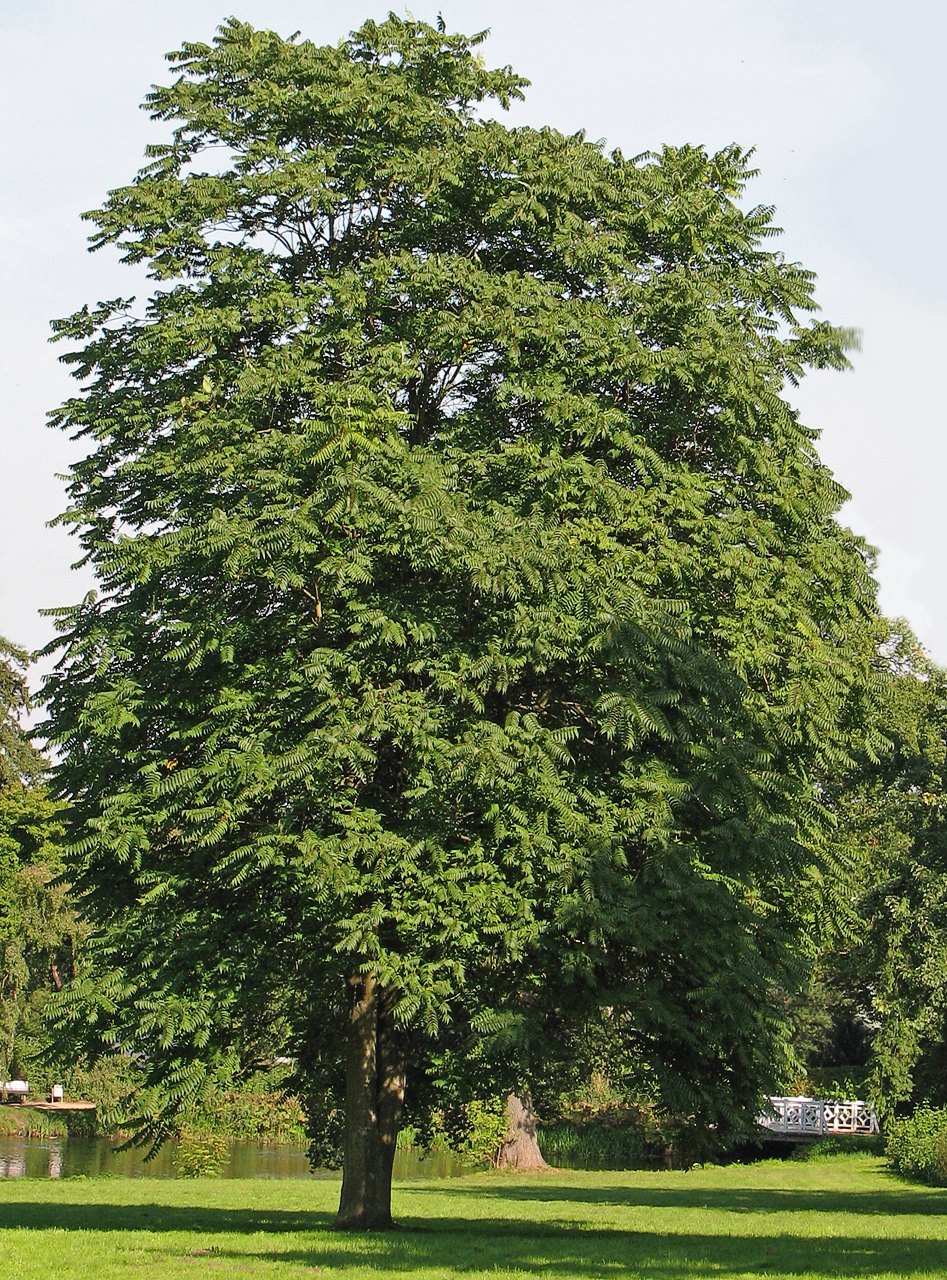
You can tell a walnut by its pinnate leaf with 5–9 large, smooth-edged leaflets and a spicy scent; a tree of heaven has much bigger leaves with 13–41 leaflets, each with 1–3 coarse teeth at the base, which stink when crushed.
Count the leaflets and smell them. A few large leaflets with a pleasant, spicy scent: walnut. A leaf of 40–90 cm with dozens of leaflets and an unpleasant smell: tree of heaven, an invasive non-native species best removed.


| Walnut | Tree of heaven | |
|---|---|---|
| Leaves | Alternate, pinnate with 5–9 large, smooth-edged leaflets; the terminal leaflet is the largest. When crushed it smells aromatic. | Alternate, pinnate, 40–90 cm long with 13–41 leaflets. These are untoothed apart from 1–3 coarse teeth near the base, with a small gland beneath. |
| Flowering | May | June–July |
| Fruit | Walnuts in a smooth green husk that turns black and splits open as it ripens. | Clusters of twisted winged fruits that turn red to brown. |
| Bark | Smooth and silver-grey for a long time, later deeply fissured. Twigs cut lengthways show chambered pith. | Smooth, grey with pale vertical stripes. |
| Shape and height | Fruit tree, 15–25 m | Broadleaf tree, 15–25 m |
| Site | Full sun, any garden soil, normal | Full sun, any garden soil, dry |
| Native to Belgium | No, naturalised | No, an invasive alien species |
| Good for bees, butterflies and birds | Yes, for birds | Little |
| Poisonous to people and pets | Not known to be poisonous | Not known to be poisonous |
| Pruning months | July–September | Better removed than pruned |
The best feature in each season
- Spring
- Both come into leaf late, in May, with reddish young leaves. Crush one: spicy on the walnut, foul-smelling on the tree of heaven.
- Summer
- In June–July the tree of heaven flowers with large panicles of small greenish-yellow flowers that smell unpleasant. By then the walnut already carries green, smooth fruits.
- Autumn
- The walnut drops its nuts in September–October from a husk that turns black and splits. The tree of heaven bears clusters of twisted, winged seeds that turn from red to brown and hang on for a long time.
- Winter
- Cut a twig lengthways: the walnut has a chambered pith, like a ladder of tiny rooms; the tree of heaven a thick, solid pith and large, heart-shaped leaf scars.
Where do they grow?
The walnut comes from south-eastern Europe and Asia and has been naturalised since Roman times: on farmyards, in meadows and in large gardens. The tree of heaven comes from China and pops up in towns, along railways, in paving joints and walls, and spreads quickly.
Which one for your garden?
- Do not plant a tree of heaven: it is an invasive non-native species on the EU list, and planting, growing and selling it is banned. Pull up seedlings roots and all; if you fell a tree, it sends up masses of suckers from the roots. For large trees, ask your local council or a tree surgeon for advice.
- A walnut is a fine tree for a large garden, a meadow or a farmyard, but with a crown of about 15 m it is no tree for a small town garden. Its leaves inhibit the growth of some plants under the crown, and it is best not to plant a pear next to it.
Did you know? The scientific name Ailanthus comes from ailanto, a name from the Moluccas meaning ‘tree reaching to heaven’: young suckers grow up to 2 m a year.
Read on
- Plant profile: Walnut
- Plant profile: Tree of heaven
- Walnut: when and how to prune
- Identification key: the question that separates them