Side by side
Horse chestnut or red horse chestnut? How to tell them apart
Aesculus hippocastanum · Aesculus × carnea
You can tell a horse chestnut by its white flower candles, its large, light green leaflets, its very sticky buds and its spiny husks; a red horse chestnut has pink to red flower candles, smaller and darker leaves and husks with few or no spines.
In May you can see it from afar in the colour of the candles: white with yellow to red spots, or pink to deep red. The red horse chestnut also stays smaller, 10–20 m against 20–30 m, with dark green, slightly crinkled leaves.

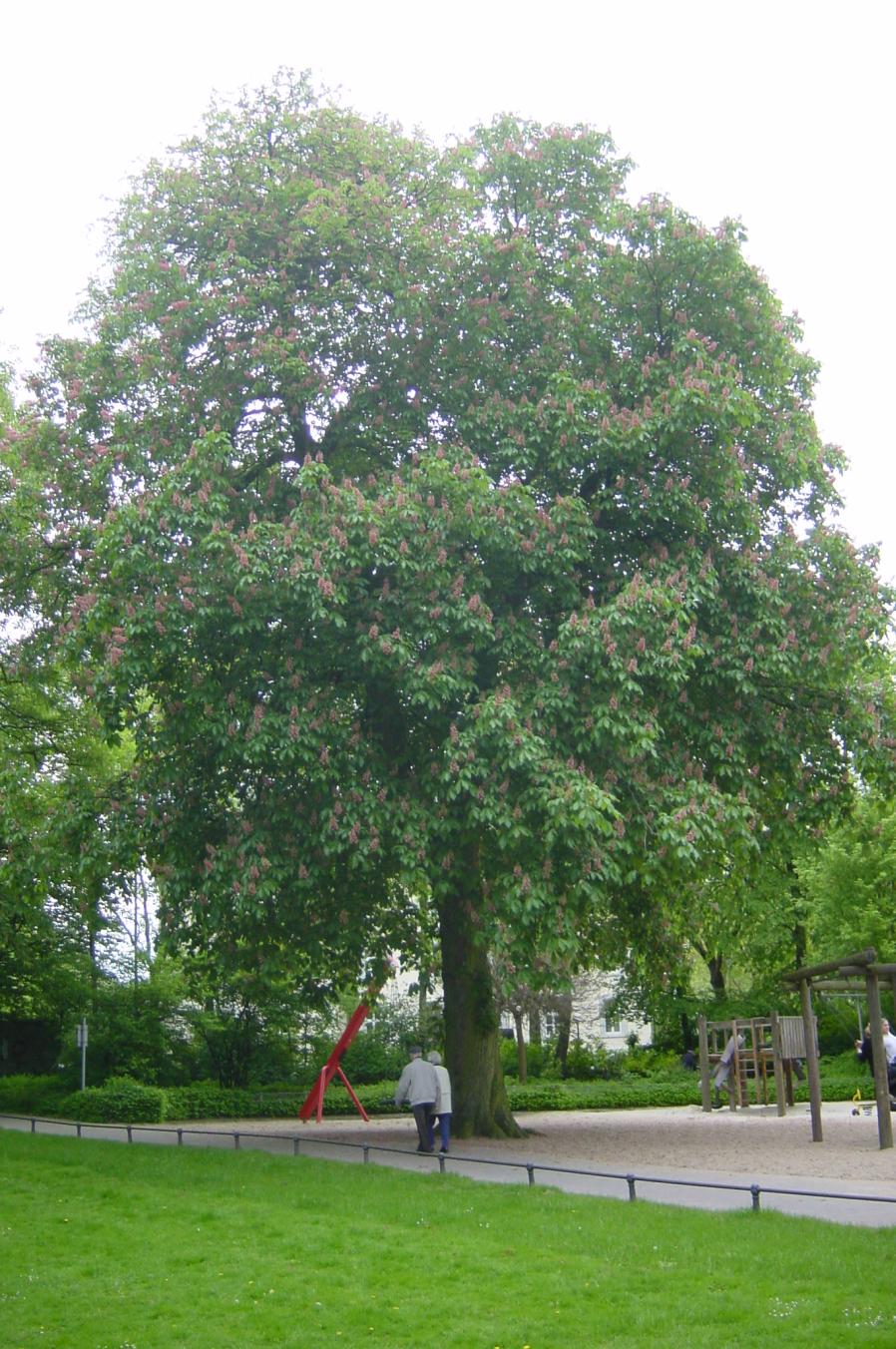


| Horse chestnut | Red horse chestnut | |
|---|---|---|
| Leaves | Opposite, palmately compound with 5–7 obovate, toothed leaflets 10–25 cm long. | Opposite, palmately compound with 5 (sometimes 7) dark green, slightly puckered leaflets 8–15 cm long; smaller and darker than in horse chestnut. |
| Flowering | Upright white ‘candles’ with yellow to red spots, in May (May). | Upright candles of pink to deep red flowers, in May (May). |
| Fruit | Green spiky husk containing one or two glossy brown conkers (not edible). | Small, round husks with few or no spines, containing 1–3 brown conkers; often only a few fruits. |
| Bark | Grey-brown, flaking in plates on old trees. Large, glossy and very sticky winter buds. | Grey-brown, smooth to finely scaly. Buds less sticky than in horse chestnut. |
| Shape and height | Broadleaf tree, 20–30 m | Broadleaf tree, 10–20 m |
| Site | Sun or partial shade, any garden soil, normal | Sun or partial shade, any garden soil, normal |
| Native to Belgium | No, naturalised | No, planted |
| Good for bees, butterflies and birds | Yes, for bees | – |
| Poisonous to people and pets | Yes, take care with children and pets | Yes, take care with children and pets |
| Pruning months | July–August and November–February | July–August and November–February |
The best feature in each season
- Spring
- Both flower in May. On the horse chestnut the yellow spot in each flower turns red once it has been pollinated: a signal to bees that there is nothing left to collect.
- Summer
- In summer the leaves of the horse chestnut often have brown blotches from the caterpillars of the horse chestnut leaf miner; the red horse chestnut suffers much less from it.
- Autumn
- Look at the husks: large and covered in spines on the white, small and round with few or no spines on the red. The red horse chestnut often bears only a few fruits.
- Winter
- The buds of the horse chestnut are large, glossy and very sticky; those of the red horse chestnut are smaller and less sticky.
Where do they grow?
Neither is native. The horse chestnut comes from the Balkans and has graced squares, parks and farms since the 17th century. The red horse chestnut is a hybrid with the American red buckeye and is planted in streets, on squares and in larger gardens.
Which one for your garden?
- Both are too big for an ordinary garden. If you have room for a flowering tree of about 15 m, the red horse chestnut is the more compact and healthier choice.
- The conkers of both are poisonous to people and dogs: take care with small children, and do not confuse them with edible sweet chestnuts. Bees collect nectar and pollen from the flowers in May.
Did you know? The red horse chestnut is a hybrid and yet fertile: thanks to a doubling of its chromosomes it comes true from seed.
Read on
- Plant profile: Horse chestnut
- Plant profile: Red horse chestnut
- Horse chestnut: when and how to prune
- Red horse chestnut: when and how to prune
- Identification key