Identify by feature
Tree with nuts, acorns or chestnuts: which one is it?
A tree with acorns is an oak (usually English oak or sessile oak), with three-sided nuts in a prickly husk a beech, with hazelnuts a hazel, with walnuts a walnut and with chestnuts a sweet chestnut or horse chestnut.
15 species with this feature
-
Sessile oak Quercus petraea
Broadleaf tree
Acorns in clusters, (almost) without a stalk, sitting directly on the twig.
Native
-
Beech Fagus sylvatica
Broadleaf tree
Three-sided beechnuts in a bristly husk that splits open into four valves.
Native
-
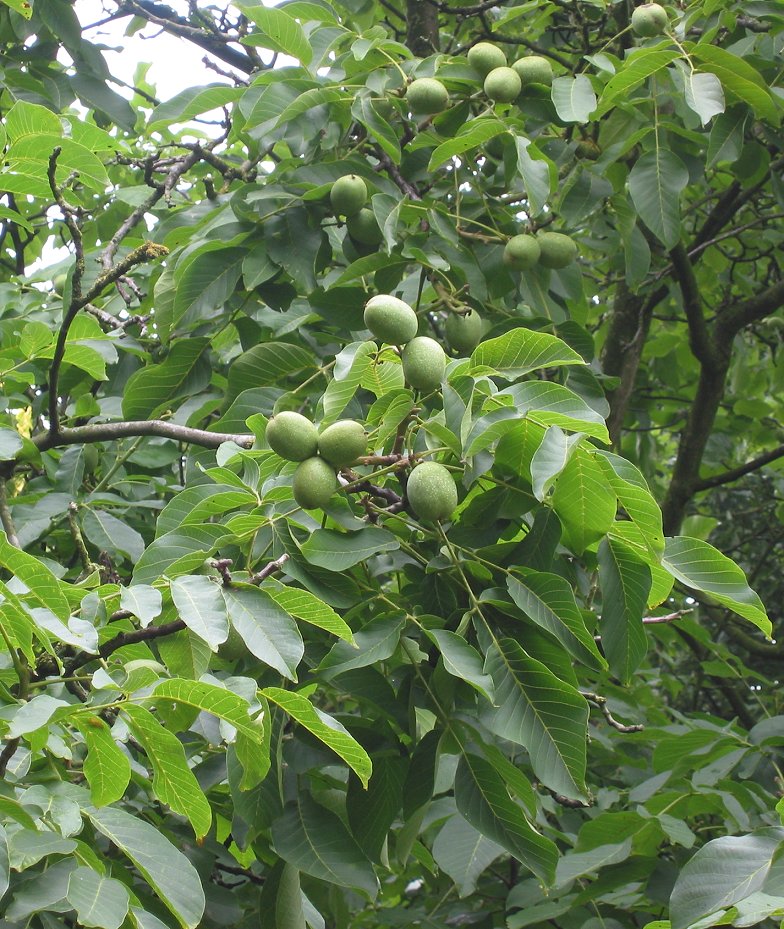
Walnut Juglans regia
Fruit tree
Walnuts in a smooth green husk that turns black and splits open as it ripens.
-
Horse chestnut Aesculus hippocastanum
Broadleaf tree
Green spiky husk containing one or two glossy brown conkers (not edible).
Poisonous
-
Red oak Quercus rubra
Broadleaf tree
Short, stout acorns in a shallow, flat cup; they only ripen in their second year.
-
Pin oak Quercus palustris
Broadleaf tree
Small, almost round acorns (1–1.5 cm) in a shallow cup; they only ripen in their second year.
-
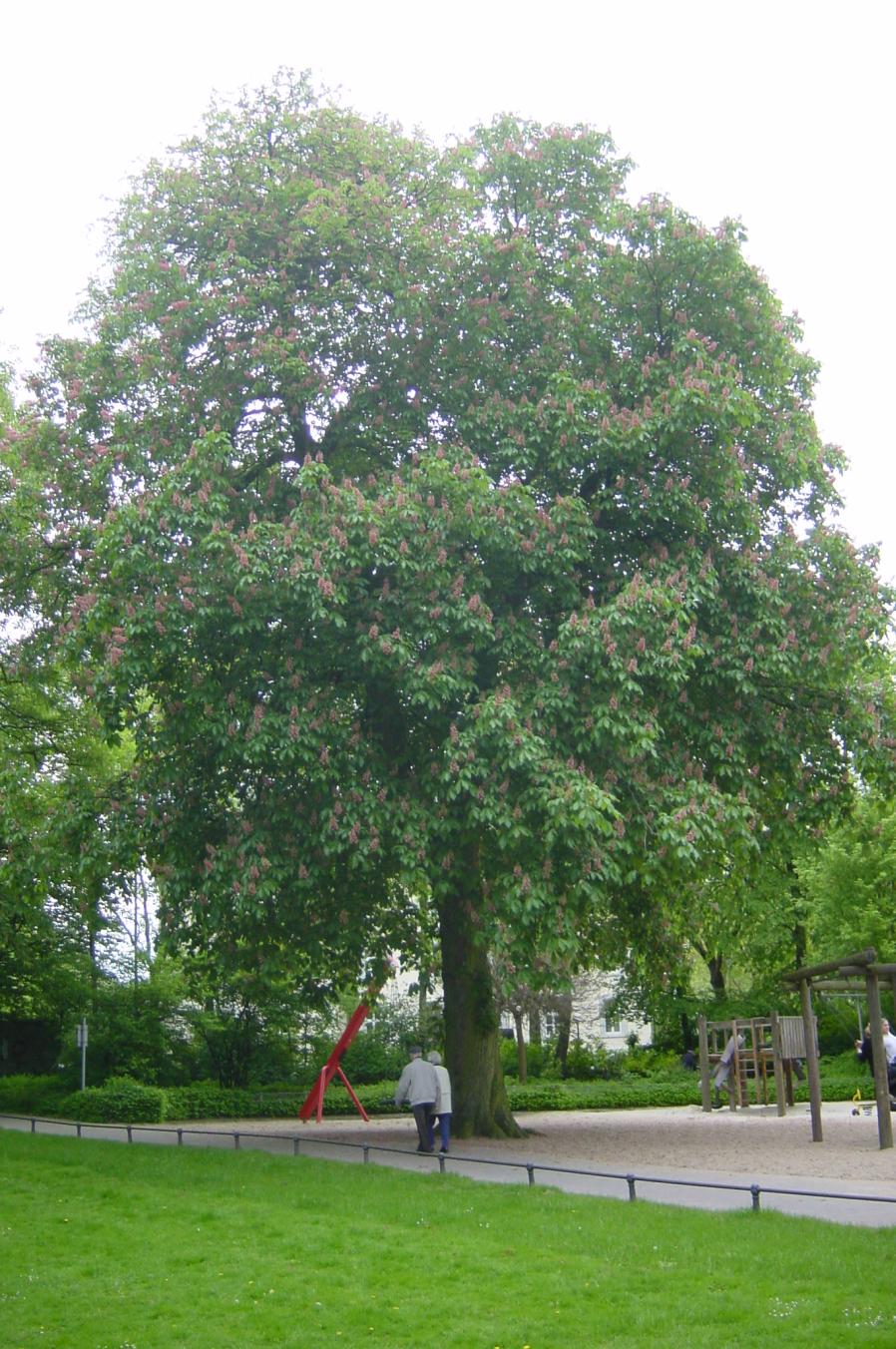
Red horse chestnut Aesculus × carnea
Broadleaf tree
Small, round husks with few or no spines, containing 1–3 brown conkers; often only a few fruits.
Poisonous
-
Turkish hazel Corylus colurna
Broadleaf tree
Hazelnuts in clusters, each in a deeply cut, curly and hairy husk; smaller and harder than ordinary hazelnuts.
-
Filbert Corylus maxima
Shrub
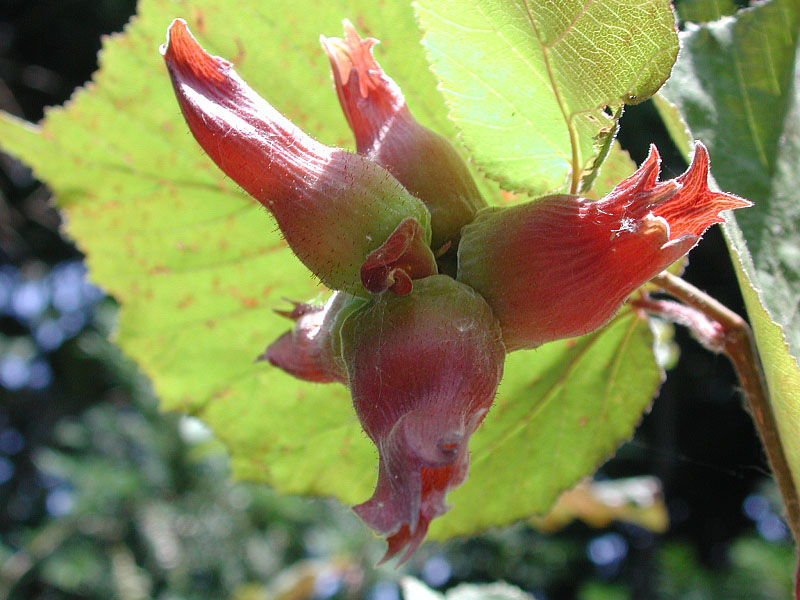
Elongated nuts (2–2.5 cm), completely enclosed in a tubular husk that is constricted at the tip and extends well beyond the nut, September.
-
Turkey oak Quercus cerris
Broadleaf tree
Acorns in a cup covered with long, curly, moss-like scales; they ripen only in their second year.
-
Holm oak Quercus ilex
Broadleaf tree
Small, pointed acorns 2–3 cm long in a grey-felted cup; they ripen in their first year.


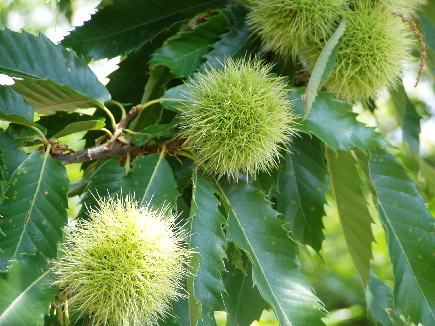





Tip: Edible chestnuts sit in a husk covered in fine needles (sweet chestnut); the shiny, round conkers of the horse chestnut are poisonous. In oaks, the stalk of the acorn tells you the species.