Side by side
Silver birch or downy birch? How to tell them apart
Betula pendula · Betula pubescens
You can tell a silver birch by its drooping, hairless twigs covered in rough little warts, its diamond-shaped leaf and the black, deeply furrowed diamonds at the base of the trunk; a downy birch has finely hairy twigs without warts that do not droop, and an oval leaf.
Run your finger along a young twig. Rough with tiny warts and hairless: silver birch. Soft and finely hairy: downy birch. From a distance the crown tells you: the silver birch has gracefully drooping twigs, the downy birch does not.
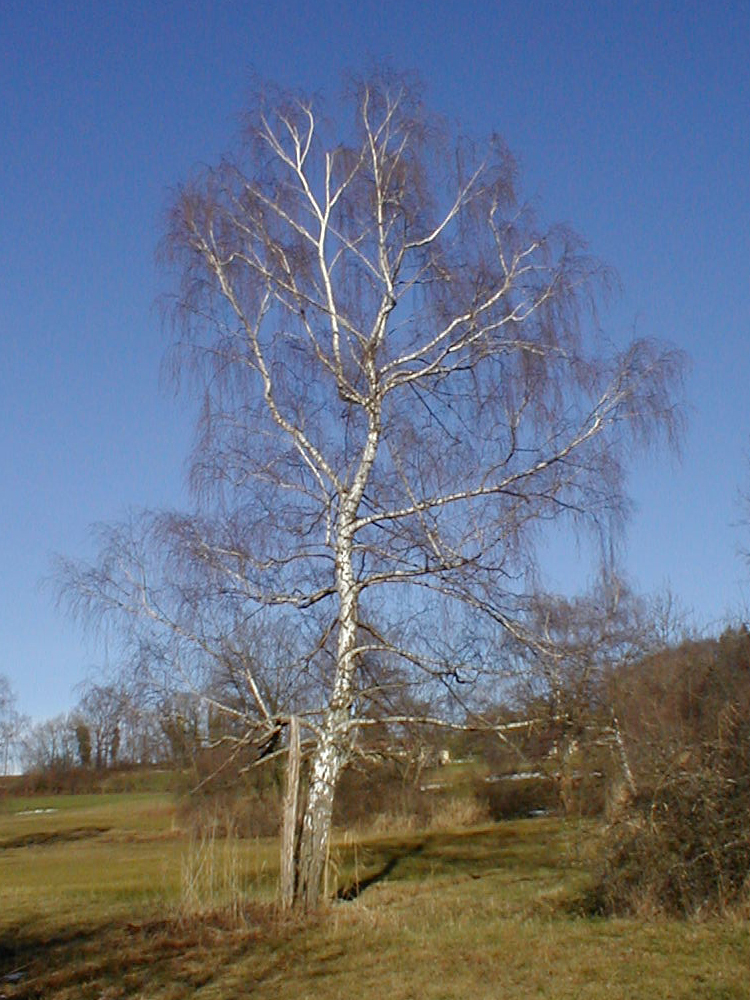
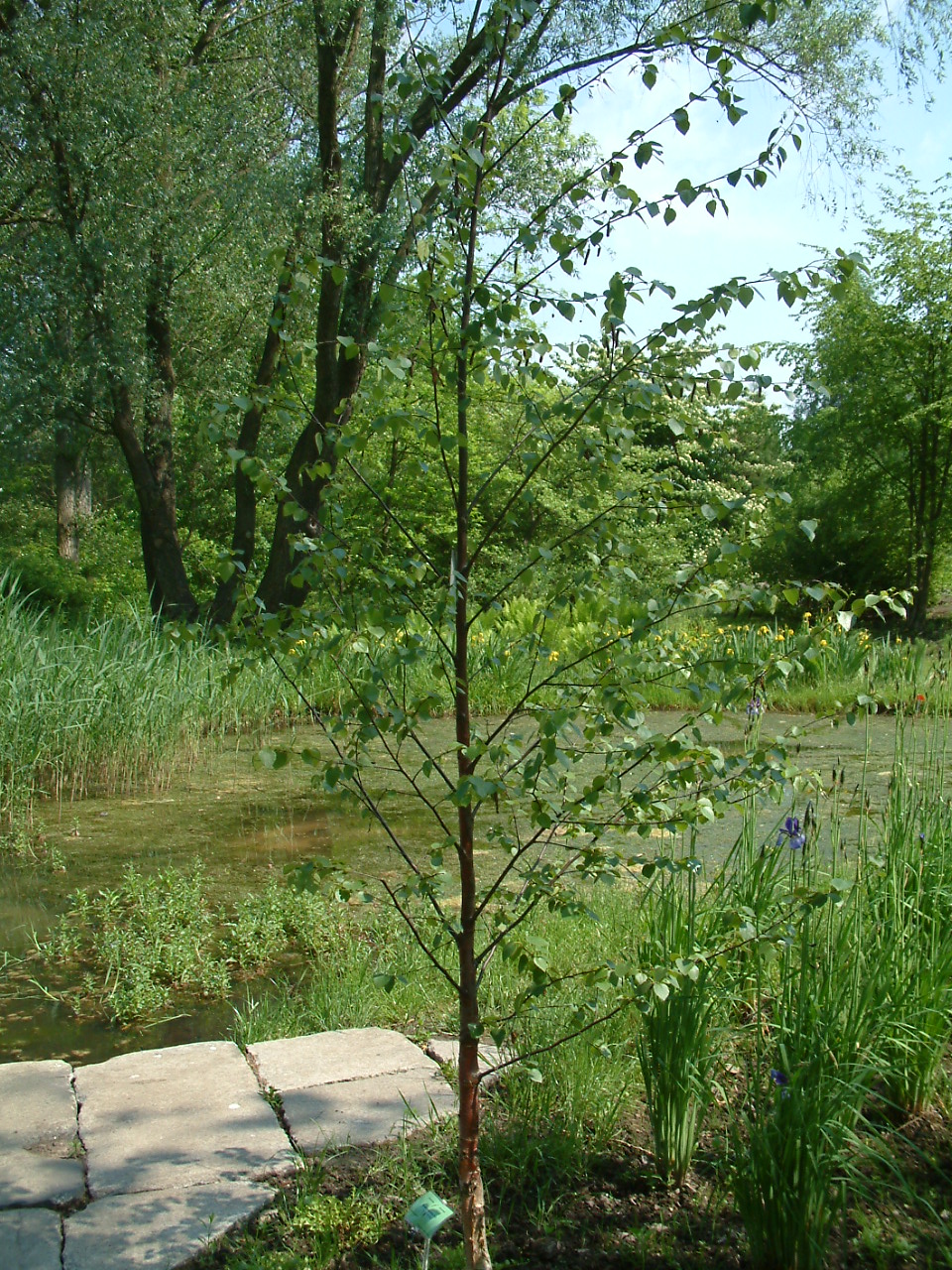


| Silver birch | Downy birch | |
|---|---|---|
| Leaves | Alternate, diamond-shaped to triangular, 3–7 cm, with a long pointed tip and double-toothed edge; hairless. Thin stalk. | Alternate, oval, 3–5 cm, with a shorter tip than in silver birch; singly or irregularly toothed, hairy underneath (when young). |
| Flowering | Hanging catkins in April (April). | April–May |
| Fruit | Cylindrical catkins that break up into small winged nutlets. | Catkins that break up into winged nutlets. |
| Bark | White with black patches; at the base of the trunk black, deeply fissured, diamond-patterned bark. | White to greyish-white, without the black, deeply fissured diamonds at the base. |
| Shape and height | Broadleaf tree, 15–25 m | Broadleaf tree, 10–20 m |
| Site | Full sun, acid soil, dry | Full sun, acid soil, moist to wet |
| Native to Belgium | Yes | Yes |
| Good for bees, butterflies and birds | Yes, for butterflies and birds | Yes, for butterflies and birds |
| Poisonous to people and pets | Not known to be poisonous | Not known to be poisonous |
| Pruning months | July–October | July–October |
The best feature in each season
- Spring
- Both flower in April with hanging catkins. The young leaf of the downy birch is hairy underneath, that of the silver birch hairless and slightly sticky.
- Summer
- Lay a leaf on your hand: the silver birch has a triangular to diamond-shaped leaf with a long, pointed tip and a double-toothed edge, the downy birch an oval leaf with a shorter tip.
- Autumn
- Both turn golden yellow and shed masses of tiny winged seeds. The shape of the crown remains the best feature: drooping on the silver birch, upright on the downy birch.
- Winter
- Look at the base of the trunk: the silver birch has black, deeply furrowed diamonds there, the downy birch stays fairly smooth and white to greyish white right down to the ground. Feel the twigs too: warts or fine hairs.
Where do they grow?
Both are native pioneers. The silver birch grows on dry, poor sandy soil, on heaths and waste ground; the downy birch is the birch of wet, peaty soil, of bogs, wet heaths and alder carr. Where both grow together, they hybridise.
Which one for your garden?
- Choose the silver birch for a sunny garden on dry, sandy soil and the downy birch for a wet garden on acid soil. With a light crown of about 7–8 m, they fit even into a medium-sized garden as a multi-stemmed group.
- They are good for moths and birds: siskins and goldfinches eat the seeds. Do bear hay fever in mind: birch pollen in April is one of its main causes.
Did you know? The white of birch bark comes from betulin, a substance that reflects sunlight and protects the trunk from overheating and frost cracks.
Read on
- Plant profile: Silver birch
- Plant profile: Downy birch
- Silver birch: when and how to prune
- Downy birch: when and how to prune
- Identification key: the question that separates them