Identify by feature
Tree with heart-shaped leaves: which one is it?
In Belgium and the Netherlands, a tree with heart-shaped leaves is usually a lime (large-leaved lime, small-leaved lime or common lime); with huge heart-shaped leaves it is an Indian bean tree or a foxglove tree, and with small, round leaves a Judas tree or a katsura tree.
16 species with this feature
-
Large-leaved lime Tilia platyphyllos
Broadleaf tree
Alternate, lopsided heart-shaped, 6–15 cm, finely toothed. Underside light green and softly hairy all over, with white tufts of hair in the vein axils.
Native
-
Small-leaved lime Tilia cordata
Broadleaf tree
Alternate, lopsided heart-shaped, 3–8 cm, finely toothed. Underside blue-green and hairless, with rusty-brown tufts of hair in the vein axils.
Native
-
Common lime Tilia × europaea
Broadleaf tree
Alternate, 6–12 cm, lopsided heart-shaped, finely toothed; underside light green and largely hairless, with white to pale brown tufts of hair in the vein axils.
-
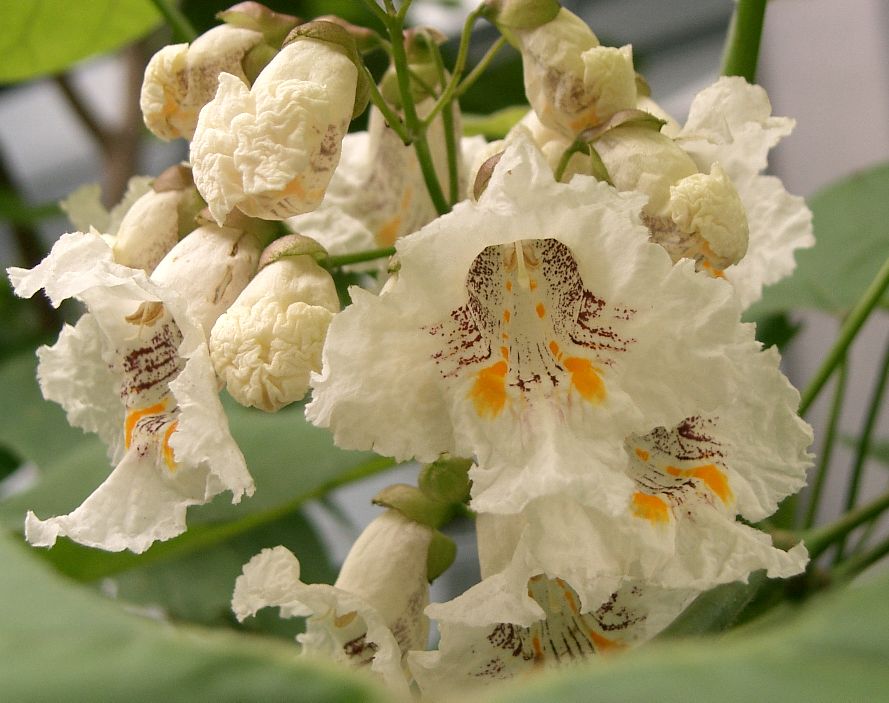
Indian bean tree Catalpa bignonioides
Broadleaf tree
Opposite or in whorls of 3, broadly heart-shaped and untoothed, 15–30 cm. Smells unpleasant when crushed. Comes into leaf late (June).
-
Foxglove tree Paulownia tomentosa
Broadleaf tree
Opposite, 15–30 cm (up to 60 cm on young shoots), broadly heart-shaped, untoothed or with a few angular lobes, softly hairy on both sides.
-
Katsura tree Cercidiphyllum japonicum
Broadleaf tree
Opposite, 5–10 cm, round to heart-shaped with a scalloped edge and palmate veins; young leaves reddish.
-
Judas tree Cercis siliquastrum
Broadleaf tree
Alternate, 6–10 cm, round to kidney-shaped with a heart-shaped base, untoothed and blue-green, with 7–9 veins from the base.
-
Common lilac Syringa vulgaris
Shrub
Opposite, heart-shaped to oval, 5–12 cm, untoothed and hairless.
-
Black mulberry Morus nigra
Fruit tree
Alternate, 8–15 cm, broadly heart-shaped and often slightly lopsided at the base, with a coarsely toothed edge, sometimes lobed; upper side rough as sandpaper, underside hairy.
-
White mulberry Morus alba
Fruit tree
Alternate, 6–15 cm, ovate to heart-shaped, toothed, glossy and smooth (not rough); irregularly lobed especially on young trees and shoots. White milky sap.
-
Silver lime Tilia tomentosa
Broadleaf tree
Alternate, 8–12 cm, rounded heart-shaped with a short pointed tip, sharply toothed; dark green above, silvery-white felted below with star-shaped hairs. Leaf stalk shorter than half the blade.
-
Caucasian lime Tilia × euchlora
Broadleaf tree
Alternate, 5–10 cm, lopsided heart-shaped, finely and sharply toothed; glossy dark green above, paler below with brown tufts of hair in the vein axils.
-
Handkerchief tree Davidia involucrata
Broadleaf tree
Alternate, 8–15 cm, broadly oval to heart-shaped with a long pointed tip, coarsely and sharply toothed; underside usually hairy.
-
Hazel Corylus avellana
Shrub
Alternate, almost round with a short pointed tip, 6–12 cm, double-toothed, softly hairy; heart-shaped base.
Native
-
Turkish hazel Corylus colurna
Broadleaf tree
Alternate, 8–12 cm, broadly oval with a heart-shaped base, coarsely double-toothed to shallowly lobed; fairly smooth.
-
Winter hazel Corylopsis
Shrub
Alternate, 4–10 cm, oval with a heart-shaped base, with teeth ending in a bristle and parallel, impressed veins; underside blue-green.

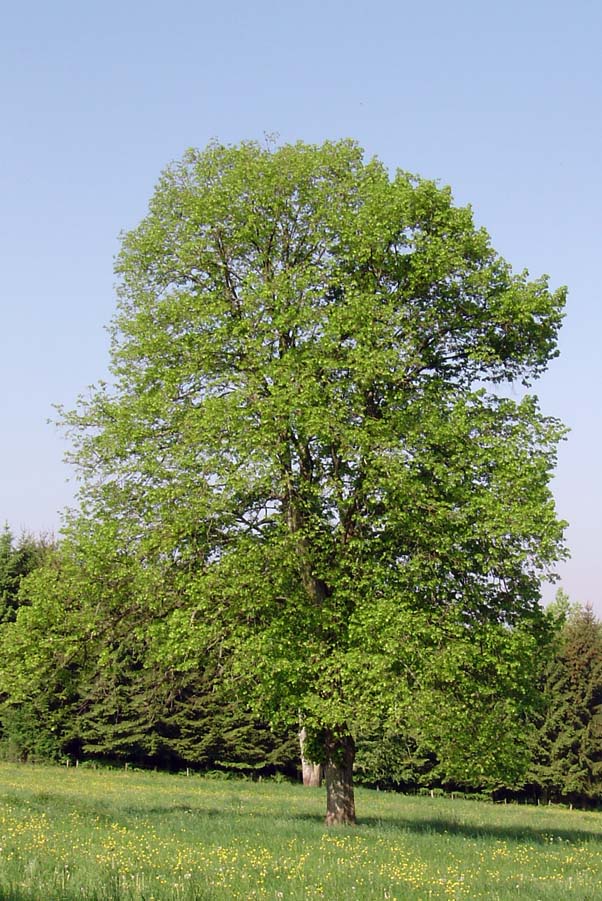
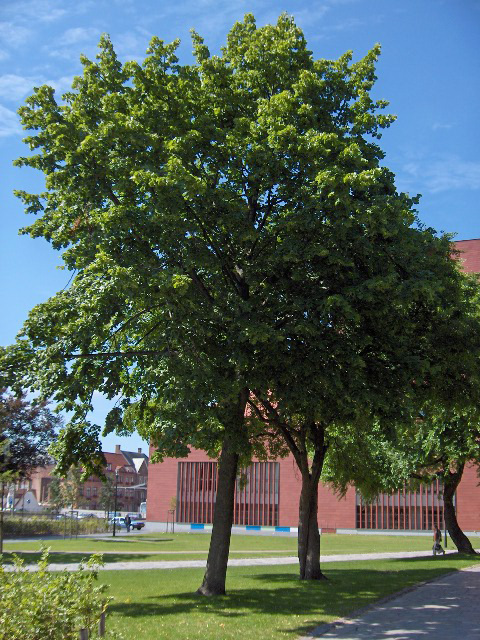


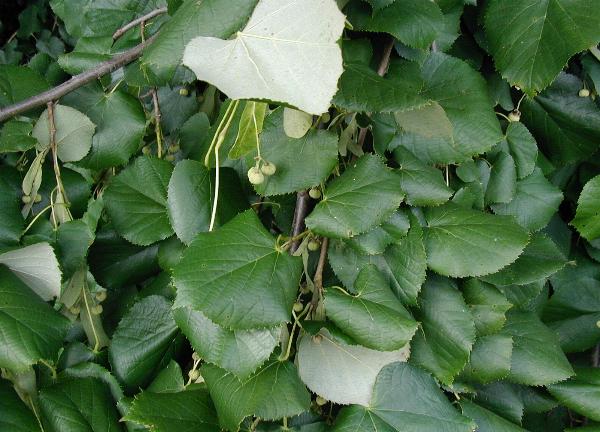


Tip: In a lime, the leaf base is lopsided and the flowers and fruits hang from a tongue-shaped bract. Turn the leaf over: the colour of the tufts of hair in the vein axils tells you which lime it is.
Continue in the identification key
Torn between two?
- Large-leaved lime or small-leaved lime
- White mulberry or black mulberry
- Common lime or large-leaved lime
- Indian bean tree or large-leaved lime
- Large-leaved lime or black mulberry
- Silver lime or large-leaved lime
- Handkerchief tree or large-leaved lime
- Hazel or large-leaved lime
- Common lime or small-leaved lime
- Katsura tree or small-leaved lime
- Caucasian lime or small-leaved lime
- Common lime or Caucasian lime
- Foxglove tree or Indian bean tree
- Common lilac or Indian bean tree
- Judas tree or katsura tree
- Katsura tree or handkerchief tree
- Turkish hazel or hazel
- Hazel or winter hazel